
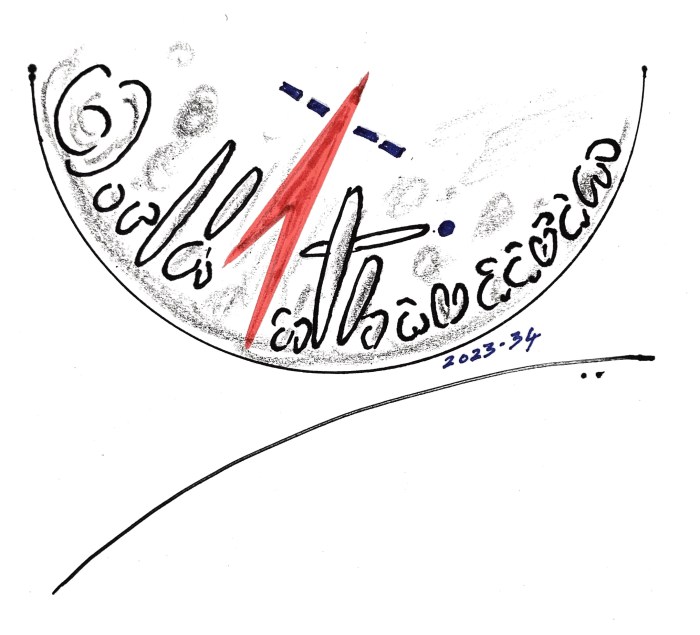
About: the world this week, 20 August to 26 August 2023; India’s Mission Possible – first country to land an unmanned space-craft at the South Pole of the Moon and explore…and other stories.
Everywhere
Mission Possible
It was an unbelievable historic moment for India on 23 August 2023, at 6.04 pm, when its unmanned Spacecraft Chandrayaan-3 achieved the most import mission objective of flawlessly landing on the dark, South Pole of the Moon – and lighting it up. No country in the world has been able to do this up to now, and India becomes the first country to explore this ‘small-pox’ like ridden surface of the Moon.
India joined the United States, Russia, and China in being able to successfully land a spacecraft on the Moon. And do the Rover ‘moon-walk’.
Chandrayaan-3 was launched on 14 July 2023 from the Indian Space Research Centre’s (ISRO) launch facility at the island of Sriharikota, off the coast of Andhra Pradesh State. It was set on course to the Moon with a Propulsion Module carrying the Moon-Lander Vikram, with the Moon-Rover Pragyan, inside Vikram’s belly.
After revolving around the Earth in gradually increasing orbit raising manoeuvres Chandrayaan crawled out of Earth’s gravity and without-hitch made the trans-lunar journey to the Moon’s orbit, on 1st August. Then following a series of orbit adjustments and in a reverse of what it did around the Earth, it gradually circled itself close to the Moon to ‘fall within its gravity’. Then Vikram separated from the Propulsion Module on 17 August, and in a series of de-boosting manoeuvres it was brought to the desired low orbit from which it could ‘strike the Moon’.
Last week, when Chandrayaan-3 was about 103 km away from the Moon, it established contact with the previous Mission’s Chandrayaan-2 Orbiter, which incidentally is still around and apparently ‘rich in knowledge of the neighbourhood’. And gathered all possible ‘tricks of the trade’ to ensure success of the Mission.
The speed of Vikram was reduced in calculated steps following a well-planned trajectory, combining horizontal and vertical velocities controlled by the ISRO Mission Centre in Bengaluru, India. Once Vikram was positioned at the designated landing point at an altitude of about 30km, at 5.44 pm on 23rd August, the Automatic Landing Sequence (ALS) was initiated. Prior to this step and a few hours ago, all required commands were uploaded to Vikram from ISRO’s Indian Deep Space Network (IDSN) facility.
The ALS is a critical part of the Mission and takes control of Vikram, when it is without Mission Control support, relying entirely on its own sensors and instruments with the onboard computer to make the final calculations for a soft landing. Upon receiving the ALS command, Vikram activated its throttleable engines for a powered descent, with the ISRO team closely monitoring on ground Earth.
Vikram then entered what is called ‘the powered braking phase’. This involves using its four thruster engines by ‘retro firing’ them to gradually reduce its speed, preventing a crash due to the Moon’s gravity. At an altitude of around 6.8 km Vikram shut down two of its engines to provide reverse thrust as it descended further. When it reached an altitude of about 150-100 meters, it employed its sensors and cameras to scan the lunar surface for obstacles to cleverly initiate the landing.
The process saw the Vikram initially reduce its horizontal velocity, re-orient itself for a horizontal position to a vertical one for vertical landing, and then reduce its vertical velocity to land at a safe speed. In a span of 19 minutes, the craft slowed itself from an initial velocity of 1.6 kilometres per second to 1 to 2 metres per second. And then, it just touched-down softly.
After landing and allowing the moon dust to settle- to prevent fogging of Vikram’s cameras-and after taking its first ‘Moon breaths’ in the thin air of the Moon, Vikram got to work. The lunar gravity being barely one-sixth of Earth’s gravity, it took a while for the dust to settle.
Vikram then opened-up: a two-segment ramp was rolled down for the Rover – which is inside Vikram – to roll-out, after which the Rover’s solar panel was quickly deployed to harness the sun’s power for the strength of walk. And then the six-wheeled Pragyan walked down the ramp and onto the surface of the Moon leaving India’s indelible imprint on the moon, as its wheels carry the Indian State Emblem and the logo of ISRO.
Everything happened exactly to plan as a nation of 1.4 billion watched, with tears of joy in the eye.
Vikram and Pragyan are expected to have a mission life of approximately one lunar day, which is about 14 Earth days, to conduct studies of the lunar environment. However, ISRO hopes to extend the mission duration by another lunar day.
This is a great accomplishment by India’s ISRO – a job very well done. There was widespread jubilation and celebrations, across the country, on this incredible unforgettable achievement. Tons of hard work surely makes things appear light and easy!
Meanwhile, Russia’s unmanned Luna-25 spacecraft crashed into the Moon on 20th August after Russia’s Space Corporation, Roscosmos, lost contact with the spacecraft. Roscosmos said it had ‘ceased to exist as a result of a collision with the surface of the Moon’. The craft was due to be the first ever to land on the Moon’s South Pole, but failed after encountering problems as it moved into its pre-landing orbit. It’s a communications failure and I’m sure Russia would find the reasons, which would be useful for future ‘Moon-Slayers’.
This is Russia’s first Moon mission in almost 50 years. The previous attempt was successful when its Luna-24 softly landed on the Moon on 18 August 1976. Once on the Moon Luna-24 collected a soil sample by using its robotic arm to dill about 2 metres in the nearby soil and stowing it away in a small return capsule. After spending nearly a day on the Moon, Luna 24 lifted off the next day entered Earth’s atmosphere and parachuted safely to land on 22 August 1976, about 200 km southeast of Surgut in Western Siberia.
The Russia-Ukraine War, and ‘Unforgiven’
Ukraine’s counter-offensive taking the battle into the heart of Russia, saw drones attack a skyscraper in Moscow. Before this drone attack another suspected attack on 18th August caused damage to an exhibition hall at Moscow’s Expo Centre, next to the city’s main skyscraper district. There have been over 150 suspected aerial drone attacks this year in Russia and in Russian-controlled territory in Ukraine.
In another news the head of the Wagner Mercenary Group, Yevgeniy Prigozhin who briefly challenged Russian President Vladimir Putin by ‘marching his troops towards Moscow and ‘suddenly giving-up’ was killed – presumed dead – in an Air-crash along with 10 others. Unverified reports say that his private plane – an Embraer-135 – was flying from Moscow to S tPetersburg and was shot down by Russian air defences.
Prigozhin led an aborted mutiny against Russia’s armed forces in June this year and seemed to be ‘forgiven’, until this end.
Women’s Football: Maiden Win
Like I said the previous week, the Queen of Spain’s presence perhaps worked like magic and Spain beat England 1-0 to lift the FIFA Women’s World Cup 2023 for the first time. Spain become only the second country in the history of football -along with Germany – to win the Men’s and Women’s FIFA World Cups.
Spain’s Queen Letizia and her younger daughter, Princess Sofia, traveled to Sydney, Australia, for the World Cup finals on Sunday. And then took part in the celebrations on the field after Spain defeated England.
Spain’s skipper and defender-in-Chief, Olga Carmona opened the scoring-and the winning goal- in the 28th minute of the 1st half, shooting across England’s goalkeeper, Mary Earps. Later Spain’s star midfielder Jennifer Hermoso got an opportunity to make it 2-0, when Keira Walsh’s hand-ball was penalised with a spot-kick, but England’s goal-keeper saved the penalty.
There was a controversy about the trueness of ‘saving the goal’ but FIFA quickly resolved the issue, following a Video Assistant Referee check and another by the referee on the monitor. The Rules say, ‘The defending goalkeeper must remain on the goal line, facing the kicker, between the goalposts until the ball is kicked. When the ball is kicked, the defending goalkeeper must have at least part of one foot touching, in line with, or behind, the goal line.’ After due diligence, FIFA determined that Mary Earps’ feet was on the line when the kick was taken.
Japanese player Hinata Miyazawa won the Golden Boot scoring five goals through the tournament. Spanish player Aitana Bonmati was voted the tournament’s best player, winning the Golden Ball, whilst Salma Paralluelo was awarded the Young Player Award. England goalkeeper Mary Earps won the Golden Glove, awarded to the best performing goalkeeper of the tournament.
The closing moments of the Work Cup saw the kicking up of another controversy. During the presentation ceremony, Spanish football Chief Luis Rubiales, 46, gave Spanish midfielder Jennifer Hermoso an unsolicited kiss on the lips. Earlier, in the stands he was seen celebrating victory by grabbing his genitals.
Rubiales has since agreed to quit, after initially refusing, on being roundly condemned by the football world for his actions following the World Cup final.
Indian Chess
While Chandrayaan-3 was making its moves to kiss the Moon, and ‘Pragyan’ to start strolling on the Moon, another Indian – an original child prodigy- an 18 year old going by the name of Rameshbabu Praggnanandhaa was making his own calculations to land the FIDE (International Chess Federation) World Chess Championship Title.
He became only the second Indian and the the youngest player ever to enter the World Chess Final to face World No 1 Norwegian, Magnus Carlsen after defeating the World No 2 and World No 3, all in the same event.
Praggnanandhaa had stunned World No 3, Fabiano Caruana on Monday in the tie-break in the semifinals. He became the third youngest player after the legendary Bobby Fischer and Carlsen to qualify for the Candidates tournament.
However this landing on the chess board was not soft and after two-drawn matches Praggnanandhaa lost to Magnus Carlsen in the first tie-breaker.
India is on the move. Tomorrow is another day!
More mission possible stories coming-up in the weeks ahead. Invest in India, think Chess and stay with World Inthavaaram.
 Kumar Govindan's Words