This is my Blog where I essay stories on life about and around me, on subjects that stir and shake me up, as I turn, and make life's pages count: hoping to inspire you to live your own story!
Author: Kumar Govindan
I am the first Graduate - an Engineer - in the family; the first to be employed in the Government Sector, India; the first to go overseas for work - USA; the first to throw it all and become an Entrepreneur (and fail); the first to get back to work - this time with the Tata Group, India - after 4 years of chasing 'business dreams'; and, the first to pick-up the Entrepreneur thread again. I now run a Women's Apparel design and styling Boutique - Mavira Designs - along with my wife.
The objective of my Blog is to tell my story, intermingled with news stories from all corners of the World, with wit and pun - to squeeze a few laughs, perhaps a smile. I'm sure you will enjoy the reading.
About: A break free commentary on events on our Planet, anchored on the news of the world. Any comments beyond the storyline, are entirely mine, without prejudice -take it or leave it. This is a run of events from 16 September to 26 September 2025: Rumblings of a Palestine State; Trump at the UN; more Tariffs on India; Leprosy concerns; and a cure for Huntington’s Disease.
Rumblings
France’s President Macron is clearly off the grid, saying, “The recognition of a Palestinian State is the best way to isolate Hamas”. Well, without anyone asking, that was what Israel did- albeit in a different way-in the year 2005. It unilaterally, and with the best intentions, wholly vacated the Gaza Strip, even going to the depth of digging up graves of buried Israelis and shifting them to mainland Israel. It left behind flourishing businesses, especially modern Green Houses, which were destroyed and parts cannibalised for making and sending rockets into Israel, in an endless cycle of violence. The Palestinians in the Gaza Strip voted for Hamas to rule them, and look what’s happened. Instead, Macron needs to be schooled-maybe even slapped on the face by his once-upon-a-time Teacher wife, to say, “Release the 48 hostages, give-up arms, show us you can peacefully co-exist alongside Israel, and we’ll think about recognising or helping you establish a peace-loving Palestine State”. Some sense does prevail in the world with countries such as Singapore, Japan, New Zealand saying exactly that. I wished India, which recognised Palestine way back in the 1980s, would re-consider and ‘de-recognise’, on similar lines. Diplomacy is a tough task; some things cannot be undone? Some States are formed on pure love; some on unalloyed hatred.
US President Donald Trump stormed the United Nations (UN) with a commonsensical, blunt speech, after he and wife Melania Trump were almost knocked off an Escalator, which suddenly stopped working. And thanks to their great fitness levels, they stood standing. Trump used the Escalator malfunction to talk about the ineffectiveness of the UN in preventing wars. He boasted of having stopped seven wars and it being the UN’s job to stop wars, it was nowhere in sight, did not even call him to ask; only writing letters of condemnation. And not paying attention to the matter.
He flung Climate Change out of the Sky back onto Planet Earth, saying the ‘Go Green’ initiative is the biggest cheat and fake thing happening in the world: with all the noisy windmills and acres of solar panels stifling real green vegetation. Become friends with coal- fall in love with it – gas, and oil and use these resources to grow and develop. And he had a word on Immigration that each country should safeguard its borders – else they will find themselves heading to hell. What with people who have nothing to do with your culture and faith entering your country – built on the shoulders, the blood, sweat, and tears of your forefathers (wish Churchill was around – he would have imposed a 100% tariff on stealing his famous lines)? He rambled on to say, the jails of Germany, Austria, and beautiful Switzerland are filled with immigrants, who refuse to follow your rules!
The load on India cannot get heavier. Donald Trump, with his Bull-in-China-Shop attitude, imposed at $100,000 fee per H1 B Visa for ‘talent’ coming into the US, from India. That works out to about ₹89 Lakhs. Initially, it was thought that it would apply annually and to everyone, but then it was said to be a one-time fee and only for the newcomers. Better India keeps its good stuff within its borders. And why did India not think of holding its great talent pool, incubated in its superb Institutions, instead of letting them walk to America? Do we need a Trump to show us what is wrong with our systems?
The Dadasaheb Phalke Award is India’s highest award in the field of cinema, given by the Government of India and presented annually at the National Film Awards. The recipient is honoured for outstanding contribution to the growth and development of Indian cinema and is selected by a committee consisting of eminent personalities from the Indian film industry. The award comprises a Swarna Kamal (Golden Lotus) medallion, a shawl, and a cash prize of ₹1,000,000. It is named after Dadasaheb Phalke, who is regarded as the father of Indian cinema. He directed India’s first full-length feature film, ‘Raja Harishchandra’ in the year 1913.
This year, the Dadasaheb Phalke Award Selection Committee selected Malayalam Actor Mohanlal Viswanathan, 65, for the Award. Mohanlal is a legendary actor, director, and producer, who with his unmatched talent, versatility, and relentless hard work has set a golden standard in Indian film history. The Award was presented at the 71st National Film Awards ceremony on 23 September 2025.
Mohanlal predominantly works in Malayalam cinema, and has also occasionally appeared in Tamil, Hindi, Telugu, and Kannada films. He has a prolific career spanning over four decades, during which he has acted in more than 400 films. The Government honoured him with Padma Shri in 2001, and Padma Bhushan in 2019, Mohanlal was named as one of ‘the men who changed the face of the Indian Cinema’ by CNN.
A little known fact is, he is married to famous Tamil Actor and Filmmaker K Balaji’s daughter Suchitra. The couple have two children.
Leprosy
The World Health Organisation’s (WHO) latest update, which recorded nearly 182,815 new Leprosy cases world-wide rings alarm bells. A tails-up approach is required. India reported 107,851 of these, a 59% share of the world’s new cases. 20 years earlier, the global tally stood at 451,325 and India’s share then was even more, at 81 %, with 367,143 cases.
Leprosy is a Neglected Tropical Disease, which still occurs in more than 120 countries with about 200,000 cases reported every year. As per Year 2023 data, Brazil, India, and Indonesia continue to report over 10,000 new cases, every year.
Leprosy, also known as Hansen’s Disease, is a chronic infectious disease caused by a Bacteria, Mycobacterium Leprae, which affects the skin and peripheral nerves (nerves and ganglia which lie outside the Brain and Spinal Cord – the Central Nervous System), mucosa of the upper respiratory tract, and eyes. If left untreated it may cause progressive and permanent disabilities.
Transmission is via droplets from the nose and mouth during close and frequent contact with untreated people having the disease. It does not spread through casual contact such as shaking hands, hugging, sharing meals or sitting next to an affected person. Leprosy is curable with Multi-Drug Therapy (MDT). And the best part is, the person stops transmitting upon initiation of treatment.
Leprosy manifests itself through skin lesions and enlargement of the peripheral nerves. Cardinal signs are, definite loss of sensation in a pale or reddish skin patch, thickened peripheral nerves with loss of sensation or weakness of muscles supplied by that nerve. And by microscopic detection of the bacilli is a slit skin smear.
India has set itself a target of year 2027 for eradication of Leprosy through The National Leprosy Eradication Programme (NLEP). The aim is to achieve zero transmission, zero disability, and zero discrimination by 2027.
Leprosy was declared a Notifiable Disease in 2025. Any disease that is required as per law to be reported to the Public Health Authorities is a Notifiable Disease. Besides Leprosy, eleven other notifiable diseases in India are: Cholera; Diphtheria; Encephalitis; Plague; Malaria; Measles; Hepatitis A, B, C, and E; Meningitis; Dengue; Tuberculosis; and AIDS.
Huntington’s Disease
One of the most devastating diseases in the world, Huntington’s Disease, has been successfully treated for the first time, marking a break-through milestone in medicine. It is a genetic disease-hence hereditary-runs through families, and is known for killing brain cells. The symptoms resemble a combination of dementia, Parkinson’s, and motor neuron disease.
The disease gets its name from George Huntington, an American physician who contributed a classic, clinical description of the disease. We do not get to know about a lot many things until someone catches it by the collar and effectively pins it down by an understandable description. By George, Huntington did just that!
He described this condition in the first of only two scientific papers he ever wrote in 1872, when he was just 22, a year after receiving his medical degree from Columbia University in New York. It is said that, “In the history of medicine, there are few instances in which a disease has been more accurately, more graphically or more briefly described.”
It is a throughly wretched disease, characterised by the jerky movements of the sufferers. The first symptoms of Huntington’s disease appear in your thirties or forties, and progresses without control leading to senility and premature death within two decades of its onset.
Huntington’s Disease is because of a gene, gone rouge-one mutation in the HTT gene-which produces a protein called huntingtin. The mutation turns the gene into a ’neuron-killer’.
The huntingtin protein is one of the most complex proteins in the human body, and we have no idea what it is actually for. Somebody will hunt it down, one day!
In the United Kingdom, Huntington’s Disease Centre Professor Sarah Tabrizi spoke after the disease had been successfully treated for the first time. The Research Team said the data showed that the disease slowed by 75% in patients. The decline patients usually expected in one year would ultimately take four years after treatment, giving patients decades of a ‘good quality’ of life.
The new treatment is a type of gene therapy given within 12 to 18 hours of a delicate brain injury. It uses cutting-edge genetic medicine combining gene therapy and ‘gene silencing’ technologies. It starts with a safe virus that has been altered to contain a specially designed sequence of DNA. The virus then acts like a microscopic postman – delivering the new piece of DNA inside brain cells, where it becomes active. This leads to lower levels of mutant huntingtin in the brain. In the new treatment there’s a 50% chance that one will inherit the altered gene. The future looks bright and promising.
More healthy stories coming-up in the weeks ahead. Stay watchful with Freewheeling.
About: A break free commentary on events on our Planet, anchored on the news of the world. Any comments beyond the storyline, are entirely mine, without prejudice -take it or leave it. This is a run of events from 1 September to 15th September: the churn and restlessness in the world; Gen Z in Nepal; India pulls up its sleeves; and the passing of fashion designer Armani.
The World on a Spin
The World is definitely spinning-now it seems more on the inside-churning and in a multi-dimensional whirl!
France dived into a political crisis when its Prime Minister (PM) Francois Bayrou was defeated in a confidence vote in the National Assembly: 364 votes against to 194 for. He submitted his government’s resignation to President Emmanuel Macron, who quickly decided to replace him with close ally Sebastien Lecornu. This is France’s seventh PM under Macron, and the fifth in less than two years: a pointer to the disenchantment and full-grown frustration with Macron’s second term.
Lecornu, 39, has spent the past three years as Minister of the Armed Forces focusing on France’s response to Russia’s war in Ukraine. He has now been given the task of consulting political parties, probably on a war-footing, with the aim of adopting France’s next budget.
In the United Kingdom, the British seem to have taken US Vice-President J D Vance’s words -said in jest-seriously. He joked that Britain could well become the “first truly Islamist country to get a nuclear weapon,” following the Labour Party’s election victory. And with the appointment of a Pro-Palestine rabble-rouser as Home Secretary, along with the climbing incidents of Islamic lawlessness, they are on course to achieving that status. Shabana Mahmood has been appointed new UK Home Secretary, replacing Yvette Cooper following a major Cabinet reshuffle in the Labour-led government, triggered by the resignation of Deputy Prime Minister Angela Rayner.
Meanwhile, in recent times, Central London has become the stage of many protests. ‘Unite the Kingdom’ march, organised by anti-immigrant activist Tommy Robinson, was attended by around 110,000 people. Then there was the ‘Stand Up to Racism’ counter-protest, besides the ever-so-often, running-on-your-screens, pro-Palestine protests.
Looks like it’s back to old assassination ways in the United States of America: the guns were always there; many are finding the trigger more often than before.
Charlie Kirk, 31, a close associate of US President Donald Trump was assassinated on 10th September while on stage at Utah Valley University in Orem, Utah, for a Turning Point USA (TPUSA) event, ‘The American Comeback Tour’. Kirk was fatally shot in the neck, around 20 minutes after the event began, in front of an audience of about 3,000 people.
Charlie was a political activist, author, and media personality. He co-founded the student organisation TPUSA in 2012, which caters to conservative youth on American university campuses and was its Executive Director. He was one of the most prominent voices of the populist MAGA movement and exemplified the growth of Christian nationalism in the Republican Party. He leaves behind two young kids and his wife Erika Kirk who pledged to keep his legacy alive.
The suspect, Tyler Robinson, 22 was arrested for the killing, turned in by his own father, to who he admitted the crime. This, after the father saw released photos of the suspect and confirmed that was it was his son. It is said that despite a good upbringing, Tyler Robinson was radicalised ‘in a fairly short amount of time’. Tyler is a third-year student in the electrical apprenticeship program at Dixie Technical College, Utah Valley University, where Kirk was killed.
On the same day, 10th September Indian origin Chandra Nagamallaiah was brutally beheaded in a Dallas Motel by an undocumented immigrant, an illegal alien from Cuba, Yordanis Cobos Martinez, in front of his wife and son. The gruesome act took place at the Downtown Suites Motel in Dallas where Chandra Nagamallaiah and Cobos-Martinez were workers. Nagamallaiah had approached Cobos-Martinez and a female colleague while they were cleaning a room, telling them not to use a broken washing machine. Cobos-Martinez became enraged as Nagamallaiah had asked the female colleague to translate what he was saying instead of addressing him directly. Cobos-Martinez left the room, pulled out a machete ‘from his person’ and launching the assault. Nagamallaiah ran through the motel’s car park screaming for help, but the suspect chased him down and struck him repeatedly.
In late August Ukrainian refugee Iryna Zarutska was killed on a train at the East/West Boulevard light rail station on the Lynx Blue Line in Charlotte, North Carolina. Iryna Zarutska, a Ukrainian refugee who had fled her country because of the Russian invasion, was fatally stabbed. Her assailant, Decarlos Brown Jr., was arrested upon exiting the train and charged with first-degree murder. The 34-year-old Brown was arrested 14 times before the stabbing; he was convicted of breaking and entering. While on probation, he was arrested for armed robbery. And was incarcerated for more than five years in state prison
What’s happening in the United States of America?
Generation Z (Gen Z) is the generation born in the late 1990s or the early 21st century, perceived as being familiar with the use of digital technology, the internet, and social media from a very young age.
It was student and youth-led, Generation Z’s simmering churn in Sri Lanka some time ago, which spread to Bangladesh and leaders of both countries flying-out to escape the fury of the mobs. This time it was the turn of Nepal.
Nepal is in the grip of its worst political turmoils in decades after Gen Z led protests over a social media ban erupted and transformed into a nationwide uprising against corruption and entrenched political leadership. At least 70 people have been killed in clashes with security forces, which appears to have ignited latent fury. Demonstrators scorched the streets, torched the homes of senior leaders, and stormed (burnt it as well) Parliament leading to the resignation of the Prime Minister.
In events leading to the chaos, Nepal banned social media sites, including Facebook and Instagram, after they did not register with the Ministry of Communication and Information Technology. A notice said social media giants are given a week to register with the government, starting 28th August. But none, Meta (Facebook, Instagram, WhatsApp), Alphabet (YouTube), X, Reddit, and LinkedIn – had submitted applications, by the deadline.
The number of Facebook users in Nepal can be put at around 13.5 million, and Instagram at around 3.6 million. Many rely on social media for their business. As the social media platforms went down in Nepal, those affected started protesting. The demonstrations against social media ban then snowballed into an anti-corruption protest.
There have been a series of corruption scams and allegations against high-ranking political leaders in Nepal, with little action taken and hardly anyone brought to book. Another factor is the ‘Nepo kids’ phenomenon. The children of political leaders flaunted their wealth and lavish lifestyles, which fuelled resentment among young people.
The turmoil appears to have subsided for the moment, with the ‘social media’ selection of former Chief Justice Mrs Sushila Karki, as interim Prime Minister. Karki took the oath of office after an agreement with protest leaders from the Gen Z movement. Nepal’s newly-appointed interim PM says she will be in the post for no longer than six months. “I did not wish for this job. It was after voices from the streets that I was compelled to accept,” Sushila Karki said, speaking for the first time since being sworn into office on Friday. She said she would hand over to the new government which will emerge after elections on 5th March, next year. Incidentally, Karki’s husband, Durga Prasad Subedi, is a Nepalese democracy fighter, author, and politician who was one of the three youth wing leaders of the Nepali Congress involved in the 1973 Royal Nepal Airlines DHC-6 hijacking. We sure have a potboiler in Nepal.
In keeping with the ‘World tempo’ the other two ‘good old wars’ have become a part of everyday life. Russia continues slamming Ukraine with gunfire, and Israel is working hard on its plan to take full control of Gaza City. Israel says it has over 40% of the city under its control.
On 8th September six people were killed on the outskirts of Jerusalem. Hamas’ armed wing, the Al-Qassam Brigades claimed responsibility for the shooting. In a lightening response, on 9th September, Israel make a tactical surgical strike on Hamas’s headquarters in Doha, Qatar, targeting the Hamas leadership based in the city, which was getting together for a meeting. The usual noises of violating international law, sovereignty, were made by Qatar, Saudi Arabia… and of course the decaying United Nations.
India
Thanks to US President Donal Trump’s belligerent stance on Tariffs, India began hugging the Russian Bear and kissing the Chinese Dragon to counter the draconian measures. And then, there is also no denying the ‘nudge’ to become self-reliant.
Russia has always been a friend-through thick and thin times; China is different with ‘bone-of-contention’ border issues, often drawing blood. Maybe, India’s Prime Minister and Foreign Minister have read the story from the Epic Mahabharata and are following through. The story is narrated by Bhishma to Yudhishthira, to illustrate the principle of forming temporary, self-interested, mutually-beneficial Alliances, during times of crisis. It goes like this.
In a large forest, there lived a Rat in a hole at the base of a Banyan Tree, while a Cat lived on the Tree. One day, the Rat ventured out of its hole only to bump into the Cat. Rats being a traditional meal for cats, the Rat, in question, sought to quickly dart away, but was stopped on its tracks by the Cat. “Let’s be friends”, said the Cat. “No” said the Rat, “how is that possible with rats being something cats always eat for dinner?” Meanwhile, a Hunter in the Forest set a trap-spreading a net under the tree-to trap birds and animals for his dinner, and the Cat got caught in it. Hearing its cries, the Rat came out of its hole. “Help Me”, cried the Cat, bite the net with your strong teeth and release me before the Hunter arrives. I promise I will not attempt to eat you”. About this time, an Owl and a Mongoose arrived on the scene and the Rat was rattled. It proposed a deal to the Cat, “Allow me to hide in your fur until the ‘clear and present danger’ passes and then I shall release you from the net”. All right, said the Cat and allowed the Rat to hide in its fur while the Owl and Mongoose went their own ways. When the Rat got out, the Cat asked it to gnaw the net and release him, as promised. “I’ll do it, said the Rat, but at a time of my choosing as you can still hunt me down for a meal. I will release you just before the Hunter arrives so that both of us have enough time to escape and we have no other motive other than saving ourselves. And you will be fully focussed on escaping without bothering to eat me”. The Rat did just that – the Hunter lost his meal. Thereafter, the Cat and the Rat went their separate ways.
India should treat China like the Rat treated the Cat. Enjoy the ‘alliance’ for mutual benefit, but be wary of China’s Dragon Fire. China cannot be trusted – at least at the Borders.
India’s Epics, especially the Mahabharata and the Ramayana, are a cornucopia of knowledge- ‘the distilled essence of solutions’ to problems plaguing mankind. They are waiting to be read, understood, and applied sensibly in today’s context. Did not someone say, ‘Old is Gold’?
US President Donald Trump’s rant was typical, “Looks like we’ve lost India and Russia to deepest, darkest, China. May they have a long and prosperous future together”. Thanks for your attention to the matter? He seems to have mellowed down later and began making overtures of India. No love lost?
Meanwhile, there is another Politician in India’s Tamil Nadu: the Opposition Leader Edappadi Palanisamy who is fighting to hold his Party (AIADMK) together with fragments falling off. Maybe he needs to pay attention to the cat & rat matter?
Goods & Services Tax (GST)
India’s PM promised a deluge of tax reliefs in the form of ‘Next Generation GST Reforms’ during his 15th August, Independence Day Address: seems to have worked it out beforehand. On 3rd September the GST Council met and unanimously accepted a two-tier tax structure of 5% and 18% plus a topping of 40% for ‘Sin Goods’. Many items were pushed down to the 5% slab and 18 % slabs from the previous 12% and 24% slabs respectively. There was cheers all-around and Industry had an ear-to-ear grin. Now they must pass-on the benefit to the common-man. A stellar achievement was the 18% GST on health Insurance was made ‘Nil’ on a quite vociferous demand through the year.Ouch, that hurt. I had just renewed my Health Insurance paying over 10,000 as GST!
Vice President of India
India got itself a new Vice President, C P Radhakrishnan, who took oath on 12 September. In the Vice Presidential elections he secured 452 votes for a maximum possible 437 votes of the ruling National Democratic Alliance (NDA). Of the 767 votes cast votes, 15 were invalid votes and the opposition candidate secured 300 votes – of a possible 315.
ARMANI
Legendary, iconic, Italian designer Giorgio Armani, a master of style and elegance who reimagined fashion for a modern audience, died on 4 September 2025 at the ripe ‘unfashionable’ age of 91. Armani was indefatigable, driven by relentless curiosity and a deep attention to the present, and to people. He is regarded as one of the most influential figures in modern fashion forever changing the way people think about clothes, something that most fashion designers rarely accomplish. Armani leaves behind one of the most successful business empires in fashion history. The superlatives are deadly.
Armani elevated red carpet fashion to the aura of brightness we see it today. He was the first to ban underweight models-of Body Mass Index (BMI) under 18- from the runway, after model Ana Carolina Reston starved herself to death due to anorexia nervosa, in 2006.
The Armani Fashion House diversified and expanded from fashion into an empire spanning beauty, fragrance, music, sport, and even luxury hotels, earning billions of dollars a year.
Armani revolutionised fashion in the 1970s with minimalist, deconstructed silhouettes (intentionally unfinished), embodied in his famous soft jackets and unstructured suits. He transformed masculine and feminine elegance into a contemporary, sober and sophisticated form. He loosened the restrictions of stiffer styles of suit wear, helping to make men wearing suits feel sophisticated while empowering women in formal settings such as work. In summary, he reinvented the suit: softened menswear making it more sensual and hardened womenswear.
Armani was born in Piacenza, Northern Italy, in July 1934. He was one of three children. His father worked as an accountant. His family’s comfortable middle-class lifestyle was destroyed by the war. He endured a difficult childhood, when there wasn’t very much food on the table, and his mother had a difficult time feeding the children. Going back, his earliest memory was hunger. And he recalled playing with unexploded artillery shells in the street, until one suddenly went off: which severely burnt him, and a close friend was killed.
As a young man, Armani drifted. In 1956, he began a medicine degree, but dropped out after three years, and joined the Army. Swiftly tiring of life in the military, he found a job as a window dresser at La Rinascente – a department store in Milan – where he moved swiftly through the ranks.
Soon, Armani was working for Nino Cerruti – an influential haute couture designer. Within months, Cerruti asked him to restructure the company’s approach. He also went on to design the company’s Hitman Menswear Collection. His work at Cerruti was a crucial period that shaped his future aesthetic, and was also foundational to his knowledge of fabrics. Most designers learn their trade as apprentices or at fashion school, but Armani’s education took place on the shop floor. He learned what fabrics the customers liked, and went to the textile mills to buy them. He became an expert in how cloth was constructed, and used his knowledge to perfect tailoring. While at Cerruti, Armani began to strip away the stiff, traditional Italian tailoring. He created softer, less structured suits that offered men a more modern attitude and freedom of movement.
In 1966, Armani met Sergio Galeotti, a young apprentice architect and fashion designer. Galeotti and Armani began a long personal relationship that would serve as the backbone of their future professional relationship as well. Galeotti prodded Armani to start on his own believing in his potential, and in turn making Armani believe in himself and see the bigger picture in starting his own fashion line.
Then at the age of 41, in 1975, having enough experience and self-belief, and with his partner Sergio Galeotti at his side, he launched his own label, Giorgio Armani. The story goes that Galeotti convinced Armani to sell his Volkswagen Beetle- for start-up capital, to hire staff and secure office space in Milan. They started small: their first office was so dingy that Armani took the shades off the lamps in order to see the fabrics. But their work was nothing short of a revolution in fashion.
Galeotti was the force behind the Armani machine, masterminding the business side, leading the financial sector and administrative aspects of the company.
The 1960s middle classes could not afford haute couture, but yearned for a stylish, distinctive look of their own. With his expertise in fabrics, Armani provided an answer. His fine cloths made possible a menswear range with neat, precise cuts that could be manufactured at scale. Its distinctively Italian style began to influence the way the fashionable dressed. And with more women entering the workplace, Armani spotted an opportunity. “I realised that they needed a way to dress that was equivalent to that of men,” he said. “Something that would give them dignity in their work life.”
With Armani’s elegantly tailored power suits, women were offered an alternative to the stiff and stuffy dresses their mothers had worn to work. They exuded femininity, but were a powerful statement of equality.
Armani received his breakthrough in the 1980s when Hollywood Actor Richard Gere donned Armani suits in the film ‘American Gigolo’. This propelled the brand into the global spotlight, cementing Armani as a household name. Soon, stars from Michelle Pfeiffer to John Travolta embraced his creations, making him the designer of choice for both red carpets and everyday luxury. He broadcast his collection live on the Internet, the first in the world of haute couture, on 24 January 2007.
Armani famously collaborated with model Vittoria Ceretti a prominent Italian supermodel who has frequently worked with Armani throughout her career, appearing in campaigns and wearing his designs at major events.
But Armani didn’t stop at clothes. He expanded into perfumes, eyewear, and multiple lines such as Emporio Armani and Armani Exchange, targeting different segments of the global market. His company’s revenue soared into billions, while his boutiques multiplied across continents. He also built a global hospitality business, spanning hotels, cafes, restaurants and bars, that carried the same elegance as his fashion line. The centrepiece of his hospitality business is the Armani Hotels developed in partnership with Dubai’s Emaar Properties.
As a sports fan, he designed suits for Chelsea and the England football team, and made the uniforms for Italy’s Olympic team in 2012. Working tirelessly Armani through his fashion and hospitality businesses built an empire worthy of a king.
Though Armani remained CEO and sole shareholder right until his death, in his lifetime, Armani drew up a succession plan consisting of a gradual transition of the responsibilities that he had always handled to those closest to him, such as Leo Dell’Orco, the members of his family, and the entire working team. He wanted the succession to be organic and not amount to rupture.
Beyond his family, his heirs will include his long-term collaborator and right-hand man, Pantaelo Dell’Orco, and a foundation. This foundation was established in 2016 and plays a significant role in the preservation of Armani’s legacy and is designed to protect the company. The will instructs heirs to sell a 15% stake in the Italian fashion house within 18 months and later transfer an additional stake to the same buyer between three and five years after his death, or pursue an initial public offering.
His family members, consist of his nieces, Silvana and Roberta Armani, his nephew, Andrea Camerana. Silvana worked at Armani designs, running the womenswear collections. Meanwhile, Roberta, the daughter of his late brother Sergio, has been the director of Armani’s public relations, becoming the bridge between the brand and Hollywood. Roberta orchestrated Tom Cruise and Katie Holmes’ wedding in an Italian castle in 2006, with Armani personally designing both the bride’s and groom’s attire. Andrea, Armani’s nephew, joined the company in 2000 and worked as both a counsellor and licensing director. He eventually became Armani’s sustainability managing director, and focuses on the brand’s policy toward the environment.
Dell’Orco, described as Armani’s right-hand man, has been involved in the company since 1977 and currently heads the men’s style office. He frequently appears by the designer’s side at various fashion shows, and events. In fact, in June 2025, when Armani missed the menswear show during Milan Fashion Week for the first time in 50 years due to an undisclosed illness, Dell’Orco took over.
Remaining independent his entire life, Armani has also stated in his will no major mergers or IPOs would be permitted until five years after his death, providing a period of stability. With this, he sought to protect his brand against potential acquisitions by other giants in the Industry.
Armani was an intensely private man. He never married or had children. And had relationships with both men and women. He had a longstanding personal relationship with Sergio Galeotti, who died of complications from AIDS in 1985. Reflecting in 2015, Armani said of Galeotti: “when I travel, I bring his photograph. There is something that remains. His spirit lingers. For sure. He lives on. I see Sergio everywhere, and I am sure he sees me. And I have hope that whatever I have done, he knows about it”. Armani described his inability to prevent Galeotti’s death as the greatest failure of his career.
In later years, Armani spent much of his time on his yacht, and loved sailing. He had been in declining health in the months leading up to his death.
More well-dressed stories coming-up in the weeks ahead. Suit and boot yourself with Freewheeling.
About: A break free commentary on events on our Planet, anchored on the news of the world. Any comments beyond the storyline, are entirely mine, without prejudice -take it or leave it. This is a run of events from 15 August 2025 to 31 August 2025: Trump & Putin; Trump & Europe; India’s dogs; Israel goes all-out; Putin-Modi-Xi axis.
Trump-Putin: Alaska Stays Cold
United Sates President Donald Trump and Russian President Vladimir Putin met across the Bering Strait in Alaska – almost a Putin swag walk from Russia. A reminder that that America and Russia are so awfully close – just a Strait away.
The Summit was broadcasted as a vital step towards peace in Ukraine and the blue background banner of the Trump-Putin Press briefing had the title, ‘Pursuing Peace’.
Trump waited for Putin on the red carpet, clapped a ‘welcome back to the world stage’ message, and shook hands before Putin accepted a lift in Trump’s armoured Presidential Limousine. Ever since Russia’s war on Ukraine, Putin had almost become a pariah- sanctioned and shunned by the West. And this was probably his comeback moment. That broad laugh on the back-seat of The Beast said it all.
There was no cease fire announced on the Russia-Ukraine War and the talks ended sooner than expected with Putin gathering all his English and telling Trump, ‘Next time in Moscow’. In Trump parlance, “There were many points that we agreed on” and adding that great progress had been made in an extremely productive meeting, ending with “We didn’t get there”.
The wide grins, firm hand-shakes, and B2 Stealth Bombers ‘guarding Putin’s head’ were the key takeaways. I reckon tomorrow is another day!
Back to School
Following the Alaska Summit, Trump called over Ukrainian President Volodymyr Zelensky to the White House for a chat on the next steps. Zelensky needed armour and several European leaders who also flew to Washington to attend the meeting provided exactly that. The scene of all of them seated in the Oval Office was much like a School principal meeting with his School Teachers, was a memorable photo – one that would hang around for a long time to come. Peace or no-peace.
Given his trenchant previous visit to the Oval Office in February, the Ukrainian President went to considerable lengths to charm his American host – including a flurry of six ‘thank yous’ within the first few minutes of the meeting. This time, Zelenksy was wearing a dark suit rather than his traditional military garb, which caused Trump to quip, “all dressed up today”.
Again, nothing significant was achieved beyond the Super Star gathering of Heads of European Countries. There was no concrete commitments to security guarantees or steps towards a peace deal. Trump told Zelensky the US would help guarantee Ukraine’s security in any deal to end the war, without specifying the extent of any assistance. Trump did not offer US boots on the ground.
The Next would probably be a bilateral meeting between Putin and Zelensky to find that elusive, shielded cease fire button. President Donald Trump said he thought it’d be better if President Zelensky and Russian President Putin meet without him. That sure is Great Thinking.
Israel
In the Israel-Hamas War, Israel has scaled-up the offensive and is going all-out in seizing control of Gaza City and hoping to rescue the remaining 48 hostages in the process. Preparations are underway to fully capture Gaza’s biggest city after nearly two years of war, despite warnings the campaign will have disastrous and unbearable consequences for Palestinians in the besieged region.
The bodies of two hostages, Ilan Weiss and Idan Shtivi, who were killed in the 7 October 2023 savagery by Hamas, have been recovered on 29th August. Initially, Idan Shtivi could not be identified, but after analysis at Israel’s Institute of Forensic Medicine, it was confirmed. Weiss’ wife and daughter were kidnapped on 7th October, but released during the first ceasefire in November 2023.
Israel’s pain grows every day.
India’s Dogs
In recent times, India’s Supreme Court has been barking louder than ever before. And what better opportunity when the issue of stray street dogs, prowling the streets of New Delhi and The National Capital Region, stands before it on all legs! It ordered all of them to be caught and housed in Dog Shelters. Stories of children and all kinds of people being attacked by street dogs, blood flowing on the streets, and the scare of Rabies was the sound in the air.
The Dog-lovers, instead of putting their tails between their legs, began squealing and fighting for the right of dogs to bite and to be fed.
This is a comprehensive failure of the administration, which should have kept the dogs under leash. In India, everything goes to the Supremes. What next, I go to court on a sewage overflow?
Then in a second coming, the Supreme Court modified its previous Order directing that all healthy stray dogs be sterilised, vaccinated, and returned to their original locations, in line with the Animal Birth Control Rules. Rabid or aggressive dogs, however, are to be kept in separate facilities. The court also ‘nudged’ the creation of feeding areas for dogs in each ward.
That sure was a denouement. Long live the dog in the Country of the Dogs?
India’s Honest Elections
India’s Leader of the Opposition decided that he cannot win elections without fraud and challenged the Election Commission of India on its cleanliness. A Special Intensive Revision (SIR) is being conducted in the State of Bihar -ahead of Legislative Elections in November this year. And of course, it was challenged in the Supremes, which barked rightly and said ‘go ahead’. And it said that it’s actually an inclusive exercise. The opposition called it ‘vote dacoity’ and that the exercise is being used to manipulate the vote list in favour of the ruling Bharatiya Janata Party (BJP)
If indeed that was the case, then how did the BJP fall short of a majority in the 2024 Lok Sabha Elections, and how did the Opposition clean-sweep some States? Tamil Nadu, for example!
The SIR Electoral Roll is a unique voter list verification process, and its importance is ensuring accurate, fraud-free elections through comprehensive voter validation. The process is still ongoing, with the first draft already published.
In the first findings, about 22 lakh names have been marked as deceased, 7 lakh voters were found registered in more than one place, and about 35 lakh people were untraceable or had permanently moved away.
Such is the scale of fraud: certainly this needs to be brought under control and voter data updated to make elections more accurate and meaningful.
Tariffs and India
US tariffs of 50% -among the highest in the world -on goods from India kicked-in from Wednesday, 27 August, as Donald Trump sought to punish India for buying Russian oil and weapons.
India shrugged-off the Trump Tariff mania and cooly continued its purchases, calling the tariffs unfair and vowing to choose the best deal on buying oil to protect its people. But fears lurk that exports and growth could suffer with India trying to improve its ‘world’s fifth largest economy’ status. The US was, until recently, India’s largest trading partner.
The tariff setback has sent India into (fire) fighting mode, with an aggressive positive stance.
Earlier this month, India’s Prime Minister (PM) Narendra Modi promised to cut taxes to mitigate the impact of the tariffs, which will disrupt millions of livelihoods across the country’s export-driven industries that supply everything from clothes to diamonds and shrimp to American consumers. He used his 15th August Independence Day Address, from the ramparts of Delhi’s Red Fort, to drive home confidence and healthy fight-back measures.
PM Modi promised Next-Generation Goods & Service Tax (GST) reforms by Diwali-a Diwali gift in the form of a massive tax bonanza- which will reduce taxes on daily essentials, benefiting MSMEs (Micro, Small, and Medium Scale), local vendors, and consumers, while simultaneously stimulating economic growth and creating a more efficient, people-friendly economy. Modi also urged small shop owners and businesses to put up boards of ‘Swadeshi’ or ‘Made in India’ outside their stores. “We should become self-reliant-not out of desperation, but out of pride,” he said. “Economic selfishness is on the rise globally, and we mustn’t sit and cry about our difficulties, we must rise above and not allow others to hold us in their clutches.”
A Task Force for Next-Generation Reforms will be formed, which will evaluate all current laws, rules, and procedures related to economic activities. The Task Force will work within a set timeline to: reduce compliance costs for startups, MSMEs, and entrepreneurs; provide freedom from fear of arbitrary legal actions and ensure laws are streamlined for ease of doing business.
Over the past years, India has undertaken a historic wave of reforms, abolishing over 40,000 unnecessary compliances, and repealing more than 1,500 outdated laws. Dozens of other laws were simplified in Parliament. In the recent session alone, over 280 provisions were removed, making governance simpler and more accessible to the people.
A High-Powered Demography Mission will be launched aimed at ensuring India’s unity, integrity, and security, tackling both strategic and social challenges.
India will launch ‘Made in India’ semiconductor chips by the end of 2025, reflecting the nation’s growing strength in critical technology sectors.
And in a grande finale rebuff to Trump’s flagrant behaviour, PM Modi visited China to meet with Russian President Vladimir Putin and Chinese President Xi Jinping on the sidelines of the Shanghai Cooperation Organisation (SCO). The meeting was in China’s port city of Tianjin. Putin called Modi his ‘dear friend’ and gave him a lift in his armoured limousine. Lots of armoured lifts and rides these days!
China and India are the biggest buyers of crude oil from Russia. And despite Trump, there is no sign that India or China are going to stop buying cheap oil, anytime soon.
PM Modi welcomed recent efforts aimed at stopping the war in Ukraine, which he hoped would end as soon as possible. And reaffirmed his support for a peaceful settlement during a telephone conversation with Ukraine’s President Zelensky.
Well, if PM Modi can magically bring about a ceasefire, literally out of the Magician’s Turban, he will give Trump a run for his Nobel Peace Prize ‘case-building’.
More wagging and biting stories coming-up in the weeks ahead. Stay solid with Freewheeling.
About: A travelogue, catching-up with permanent old friends of the Work-Place, after over 20 years, commingled with the history of the region we met-three of us, plus a revolutionary hero.
Over the years, you make friends in School, in College, and in your Work or Business Place: some close, many of the ‘Hi-Hello’ fleeting type. Call the ‘some’ permanent, and the ‘many’ temporary. I’m glad I had cultivated small circles of School and College permanent friends with, who I can just pick-up the phone and call, or meet, as if it was yesterday-never mind the gap, no questions asked!
The Work-Place friends are a leaner lot, as the relationship needs to expand beyond the office routine and enter the home. And the fact is, I have made better neighbour-friends, more than Work-Place friends – at the various places, all over India and abroad, where I lived, driven by the Job.
One such Work-Place, in India’s Tata Group, saw me catch, plant, and grow two friends-among others: one I call Bush and the other I call Monk. The three of us were Power-Plant Engineers at that time, making designs to pull electricity out of machines, now ‘officially’ retired. And surprisingly, we have been keeping in touch with each other through all kinds of ‘heedless’ ways, except physical, for near about twenty years!
Bush is now a successful Entrepreneur in Mancherial, Telangana. He runs a welding-electrode manufacturing Factory besides managing his farms spread over the region. Monk used to live in Koramangala, Bengaluru (‘his House still lives’ there) but now he lives ‘everywhere’: his biggest possession being a Nexa Blue, Suzuki Baleno car, stuffed with all his earthly belongings. And when he is not running his car and worshipping various Gods, he stays put in a one-room house somewhere in Mysuru. Having given it all up, including a wife and two sons (may be they have given him up?), he had grown a flowing beard, maintains a shinning top, and visits various Ramakrishna Mission Temples and Ashrams all over India. He is often on a Parikrama keeping and growing his faith in Hinduism. And at the same time he is an ambassador for his wife’s ‘Craft Your Wellness’ Plant-food based Regime, balancing mind, body, and spirit. That sure is one helluva job! He cleverly enticed me to buying his wife’s ‘Wellness’ book, of the name – on the return.
Bush’s son married about a year ago, and I could not be there, to sight the Pune-based bride before his son whisked her away to far-away Australia where they live. It was on short notice and too far to drive down quickly. I left a plan hanging, that perhaps one day we should meet at his newly built expansive mansion in Mancherial, Telangana – I called it Bush’s White House. Ever since, I have been looking at doors to open in that direction.
On a quiet Sunday afternoon, in the middle of July, Monk calls saying he will be in Telangana during his Everywhere Trip heading through the East, to the North Eastern States. And why not ‘have a three-state ( Tamil Nadu, Karnataka, and Telangana) summit at Bush’s White House in Mancherial? I looked up the Trains to Mancherial and found a comfortable ride on 29th July with a return booking available on 1st August. Bush then calls to confirm and without a second thought, I booked ‘em tickets, after which I told my wife that this is a Gentlemen’s Get-Together (she better stay at Home and manage our Women’s Boutique Business on her own). We then formed a Group-of-3 WhatsApp Group called ‘Bush GK(me) RSS(Monk)’ to synchronise, during the trip.
During our job days, Bush and I dreamed of starting our own manufacturing factories sometime in the future, and we made it: he runs a welding-electrode factory and I, a ‘blouse manufacturing’ factory!
It then flashed on that inward eye that about three months ago, I did another awesome Group-Of-3 Trip with permanent friends commissioned at the first Public Sector Company I joined as a Graduate Engineer Trainee in Neyveli, Tamil Nadu. That summit was in the picturesque Anchal, Kerala, and we, called the ‘three musketeers’ or sometimes ‘Terrorists’, at that time (because of our ruthless straightness in getting the job done) were meeting over the passing of the wife of the Kerala Musketeer. I could not attend the Funeral, and the trip was to make amends, share the sorrow, and re-tell the stories of the good and bad times. That was a Dilip-Kumar-GK Group and Kumar & I just jumped onto a Train, with the bookings done by Kumar, and tracked to Kerala. That was an unforgettable meeting, and I hoped this one too would top the charts!
Photos: The Three Musketeers; GK-Bush-Monk; and, the Triveni Sangamam
Coming back to this Trip, on the day of journey, from Salem Junction to Mancherial Station, the train arrived a whooping 8 hours late, which the Railways elegantly and smartly called ‘Rescheduling’. Instead of boarding at 10.20am, I boarded at 7pm and reached Mancherial the next day at about 1.30pm. It was ear-to-ear smiles and bear-hug time with Bush and Monk waiting on the Platform, and carrying me to a comfortable room in Bush’s White House. In that flash of a moment we closed the 20-year gap and spent the next two days cementing it.
Bush once won a competition of eating the most number of boiled eggs at one sitting and, I was hoping he would have a ton of eggs on the lunch table. He did not disappoint and served chicken instead-with just one boiled egg. Mrs Bush was a superb hostess, and she made sure we were well-fed for the time we stayed at Mancherial. And she struggled to meet Monk’s Food plan.
After a well-boiled lunch, we made a quick visit to Bush’s Welding-Electrode Factory, which wasn’t working that day, and just to mark attendance.
We then drove in Bush’s Tata Tiago hatchback, to Kaleshwaram, Triveni Sangaman, the confluence of River Praanahitha, River Godavari, and the mythical underground River Saraswathi. We could see the ‘shades of colour’ where the two mighty Rivers bumped into each other, while the other one silently flowed underneath. Near this spot there is a Temple – Muktheswara Alayam- which holds a Shiva Temple with a double-sivalingam. It was near about 6pm and the Temple had just closed. But we ‘prayed hard, on the double’ and mighty impressed by our devotion, the Priest opened the Gates for a quick glimpse of the sacred sivalingams. We had the Priest in our eyes and God in our minds -that made our day!
On the return, we spied a well-dressed lone-star lady running a road-side restaurant who, though the fires were yet to be lighted, promised to cook-up poori and chappati using fresh dough. We fell for it, and while Monk indulged himself in chappati, and sweet banter with the host (even handsomely tipping her in the end), Bush & I stuck to the poori-masala. It was late evening when we returned to the White House, and we called it a day and hit the bed.
The next day we started early 6.30am first trying to visit Bush’s farm(s). He tried his best to show-off his land holdings, but we could not get near as the road was too slushy after the previous night’s rain. And we saw his fields from a safe distance and measured it up.
We then left for the nearby Jodeghat Village, in Komaram Bheem District, to see Gond Tribal, Revolutionary Leader, lesser known Freedom-Fighter, Komaram Bheem’s Museum, which Bush said is a must-see (he himself had not visited until today). It was a wonderful drive through the sylvan forest road and the Museum itself was nestled among the dense greenery of the Hills, featuring a more than life-size statue of Komaram Bheem holding a rifle, at the entrance. ‘Gond’ means hill and the Gonds are essentially traditional hill and forest people.
I was flabbergasted to find that all the descriptions engraved or written about Komaram Bheem were only in Telugu-and there was no translation available in another language. Imagine if it were in the original Gondi language, would the people in the State understand? Should it not be in Hindi and English too, so that Tourists can read for themselves and live the story of Komaram Bheem? Language politics is awfully parochial and must be eschewed. On my front, thankfully Telugu-speaking Bush did the translation.
I was disappointed that we suddenly discover forgotten heroes, quickly build a memorial for them and even faster fail to upkeep them. It was disgusting to see a tooth-brush sticking out of a urinal in the Museum and this part was in abysmal condition. Wonder who brushes with what?
Photos: Komaram Bheem; a Tribal Dance; a Tribal Meeting; Bheem, his wife; and Bush’s waterfall.
The story goes that Komaram Bheem, of the Gond tribe lived in the Hyderabad State of British India and fought for tribal rights, along with other Gond leaders, leading a protracted low intensity guerrilla rebellion against the feudal Nizams of Hyderabad during the 1930s, which contributed in the culmination of the Telangana Rebellion of 1946. This could also be a precursor to Telangana Statehood achieved in June 2014 when the State of Andra Pradesh was bifurcated into Telangana and Andhra Pradesh.
During the 1900s, pre-Independence era, under the Nizam and British Rule, there was expansion of mining activities and tightening of state authority in the Tribal Gond region of what is present day Telangana. Rules & Regulations that were enforced hampered the traditional subsistence activities of the Gonds, who lived off the Forest. Zamindars were granted ownership of lands in their regions who in turn imposed taxes on Gond farming activities. Non-compliance often resulted in extreme punishment measures such as forced amputations: cutting of fingers and hands. In fear, Gonds began migrating from their traditional villages and settling in barren lands, which also turned out to be owned by these Zamindars. This led to rebellion, retaliations, and protests. Bheem’s father was killed by the Nizam’s law enforcement in one such incident. And in a confrontation in October 1920, Bheem killed a Nizam official who was sent to confiscate crops during harvest time-in lieu of taxes.
To avoid capture, Bheem showed a clear pair of heels, running away on foot to a nearby city where he was granted refuge by a local publisher who also ran a printing press. Eventually, through the gateway of Mancherial Railway Station, he escaped to Assam where he worked in the tea-plantations for over four years. During this time, he involved and engrained himself in labour union activities, and was arrested and jailed. Bheem escaped jail within four days of his jail term, boarded a goods train, and returned to his native land-to make history.
Bheem married a woman named Som Bai and moved to the interior of the Gond lands to settle down and engage in farming. During the time of harvest, he was again taunted by forest officials who tried to force him to quit the area, arguing that the land belonged to the State. Bheem then unsuccessfully tried to lobby the Nizam directly and present the grievances of the Adivasis.
Inspired by a childhood hero Ramji Gond, Bheem decided enough was enough and began to engage in armed revolution, for the rights of the Adivasis and Tribals. He formed clandestine associations with the banned Communist Party of India, and mobilised the Adivasi population at Jodeghat, calling a Council of tribal leaders from the twelve traditional districts of the region. The Gond uprising began in 1928 with the Council deciding to form a guerilla army to protect their lands. And they attacked the Zamindars in Babejhari and Jodeghat. Bheem also proposed they declare themselves an independent Gond kingdom. Perhaps this was a predecessor to attempts to form an autonomous Gondwana State.
In response, the Nizam recognised Bheem as leader of the Gond rebels and sent the Collector of the region to negotiate with him, assuring land grants to the Gonds. Bheem rejected the offer and instead sought justice and demanded regional autonomy for the Gonds, eviction of the forest officials and zamindars, and the release of all Gond prisoners held by Hyderabad state. The demands were rejected by the Nizam and the conflict continued as a guerilla campaign for over a decade. Bheem directly commanded an ‘army’ of 300 men under him and operated out of Jodeghat.
Bheem’s whereabouts were finally discovered, due to betrayal (there are so many in Indian History) and he was killed in an ambush encounter with armed policemen, along with fifteen others, in October 1940.
His death anniversary is commemorated by the Gonds every year on ‘Aswayuja Powrnami’, where an event is organised at Jodeghat, the place of his death and the centre of operations during the rebellion. That’s where his Memorial stands today. Bheem is ‘deified as a pen’ in Gond culture and is credited for coining the slogan Jal, Jangal, Zameen (Water, Forest, Land) which, symbolised and evoked a sentiment against encroachment and exploitation, has been adopted by Adivasi movements as a call to action.
The Komaram Bheem district named after the Tribal Chieftain was created from the former Adilabad district and was previously known as Komaram Bheem Asifabad district before becoming the current Komaram Bheem district.
Bheem’s grandson, Komaram Sone Rao carries the legacy, and I did read about him protesting about how his grandfather was represented in the blockbuster movie RRR, where another Bheem was loosely based on the original. RRR is an entirely fictitious story incorporating the lives of two real-life Indian revolutionaries, Alluri Sitarama Raju and Komaram Bheem, who fought against the British Raj and the Nizam of Hyderabad respectively.
On the return, as Bush was harping that there was a famous ‘Mandakini’ waterfall (I dreamt of a ‘Liril’ one), but we found a common relative, navigating through a maze of ‘blind-snakes’ (Gond poop, I guess)while Monk stayed in the car. Bush and I gave it a splash-a poor stream trying its best to fall.
On the return, we visited Bush’s Welding Electrode manufacturing Factory. And this time I could see the assembly line working in full flow: plain rods at one end and coated electrodes at the other heading to be crowded into neat little packets stamped with all kinds of technical stuff. It sure must be able to join broken parts. Bush was also making simple nails in a noisy little room with women folk doing the job with effortless ease.
We then had lunch at a multi-cuisine restaurant, which had concept dining rooms; such as Goa-beach, Railway Station… We found ourselves in a ‘Jail Room’ locked inside and served Dum Briyani with spicy hot Chicken 65.
A trip to Telugu land is incomplete without watching a Telugu ‘masala’ movie. And after a ‘power-nap’ and we sat around Bush’s smart TV to watch the Mahesh Babu starrer, ‘Maharishi’ where the hero easily bashes the bad-guys to pulp with a stylish flick of the hand or a leg. And balancing the looks of the eyelash-filled heroine at a distance. Thank God we were ‘outside the TV’!
The next day, it was time for goodbyes and warmer hugs. True to nature of the Railways-on this Trip-the return train was also ‘rescheduled’ to be late by over 2 hours. When the train chugged in to Mancherial Station, Monk instinctively looked for a Chart, which would mention F-16’s, and could not find one-no charts these days. Though through the corner of my eye, I did see one sneak into my coach.
Remember the days when charts used to be pasted on Train coaches giving out the name of the traveller, berth no, male/‘F’emale, and age. It was definitely not a sin, and almost a ‘right’ to wish that an F-16 occupied a seat near about yours. Those were the days! Expectations were ‘peak’-high, and Monk helped bring it back!
I love the Number 3 and at the moment, I’m high on it. Let’s say, Three Cheers!
About: A break free commentary on events on our Planet, anchored on the news of the world. Any comments beyond the storyline, are entirely mine, without prejudice -take it or leave it. This is a flight of events from 27 July 2025 to 14 August 2025: All kinds of wars; the great Cholas of India; the best of Chess, Football, and Cricket.
Wars: Tariff Included
US President Donald Trump continues his relentless one-minded drive on imposing tariffs on friends and foes alike, ostensibly to improve the US Economy by opening the flood gates of tonnes of cash flow into the country. This time it hit India when he signed an executive order slapping 25% additional tariff over the purchase of Russian oil. This is on top of the 25% tariff that Trump had previously imposed on India on 31st July, as part of the broader rollout of tariffs on more than 60 countries. This will come into effect on 27th August.With this, India faces at total of least 50 %-among the highest in the world. This will come into effect on 27th August. However, for goods shipped before 27th August previous tariff rates will apply until 17th September.
The tariff sledgehammer comes after days of Trump slamming India its purchase of Russian oil and accusing India of funding the Russian war on Ukraine. He said India remains the largest buyer of Russian oil along with China “at a time when everyone wants Russia to stop the killing in Ukraine”. With such purchases, he said India does not care “how many people in Ukraine are being killed by the Russian war machine”. Since Russia launched the full-scale invasion of Ukraine in February 2022, India has bought discounted Russian oil.
India hit back, exposing the hypocrisy and double-standards of the US and Europe. In a clear written statement, India pointed out that the Europe-Russia trade includes not just energy, but also fertilisers, mining products, chemicals, iron & steel and machinery, and transport equipment. The United States itself continues to import Russian uranium hexafluoride for its nuclear industry, palladium for its EV industry, fertilisers, as well as chemicals. India held that it began importing from Russia, in the first place, because traditional supplies from Europe were diverted to within Europe after the outbreak of the Russia-Ukraine War. And India works for the best interests of its people, just as the US does for its people.
On another front, India and the US are engaged in complex negotiations for a free trade agreement. As with trade deals with other countries such as the United Kingdom, India has sought to keep the politically sensitive agriculture and dairy sectors out of a deal, Trump has rejected the proposal and has pushed for their inclusion. He has also pushed for India to import genetically modified (GM) crops under the deal. India considers GM crops illegal.
In the ongoing physical wars, Israel is making plans to take complete control of Gaza City with its cabinet approving the intent. And the 50 hostages still remain in captivity. Meanwhile, Australia announced that it would recognise a Palestinian State in September.I would say that countries -including India -should announced that they would ‘de-recognise’ Palestine, if the 50 Israel hostages are not released by September.
Ukraine and Russia continue making fire and a Trump-Putin Summit scheduled to take place in Alaska on 15 August, hopes to break the ceasefire deadlock. Russia is expected to demand Ukrainian land for a peace deal, which Ukraine steadfastedly refuses. Trump would probably be ‘all ears’ on a listening exercise. And Putin is a tough customer.
The Great Cholas of South India
Indian history does not cut enough into the meat of the mighty Chola Dynasty of South India, which ruled for an unbelievable 1500 years, between 300 BCE and 1279 CE(AD)- one of the longest ruling dynasties in world history. They remain grudgingly unknown, and if at all in bits and pieces. The Cholas ruled Southern India in two stints as, the Early Cholas, and the Medieval or Imperial Cholas.
This is an attempt to shed bright sunlight, on the great Cholas, who considered themselves as descendants of the Sun.
Other names, in common use, for the Cholas are, Choda, Killi, Valavan, Sembiyan and Cenni.Killicomes from the Tamil ‘kil’ meaning dig or cleave- a digger or a tiller of the land. Valavan is connected with the Tamil ‘valam’ fertility and means owner or ruler of a fertile country. Sembiyan means a descendant of King Shibi – a legendary King whose self-sacrifice in saving a dove from the hot-pursuit of a falcon figures among the early Chola legends. The story flies like this, ‘As King Shibi sat in court one day, a sparrow sought refuge in his lap, while being chased by a falcon. The falcon demanded the King release the sparrow, as it constituted its means of subsistence. Accepting the falcon’s right, the King offered his own flesh in order to fulfil his sovereign duty of protecting his subjects’. The later Cholas claimed to have descended from King Shibi. The Tamil name for Shibi is Sembiyan, a name assumed by many Chola kings.
The Early Cholas ruled in Uraiyur (now Tiruchirapalli) and Kaveripattinam, Tamil Nadu, during the period 400 BCE to 200 AD. This includes the Sangam Period, which legendary literature reveals the first authentic evidence of the Chola dynasty. The Sangam is the literary gathering of Tamil poets and scholars who were first patronised by the Pandyan kings of Madurai. The Sangam era is significant in the development of early Tamil literature and provides valuable insights into the social, cultural, and political landscape of the period.
Going back in time, the earliest known Chola King was Kantaman, perhaps mythological, said to be a contemporary of the Hindu Sage Agastya, whose devotion is believed to have brought the River Kaveri into existence (from the water pot of Agastya). Then came the Chola King Dharmavarma who first developed the shrine of the Srirangam Ranganathaswamy Temple– A Vaishnavite shrine dedicated to Lord Ranganatha (a form of Lord Vishnu and his consort Ranganayaki – a form of Goddess Lakshmi) near present day Tiruchi. The temple is a thriving place of Hindu worship of Vaishnavism. Flooding of the River Kaveri destroyed the temple, and later, his descendant, King Killivalavan rebuilt the temple complex. The Temple site is on an island bounded by the Rive Kaveri and River Kollidam. Later Chola Kings built upon and expanded the Temple structure. The Temple is nominated as a UNESCO World Heritage Site and one of the oldest functioning religious complexes in the world.
In 190 AD Karikala Chola or, Karikala The Great, stands out, unsurpassed, along with another King Kocengannan. Karikala was the son of the great warrior Chola King Ilamcetcenni – of many beautiful chariots. Karaikala is mentioned as the descendant of a King who compelled the wind to serve his purposes when he sailed his ships on the great Oceans. ‘Karikala’ means ‘elephant feller’ or ‘charred leg’. He had charred his leg in a fire-accident while escaping when he was deposed and imprisoned. He then fought his way back to the throne to create History.
Karikala Cholan was one of the greatest kings during the Sangam Age in South India. He led the Chola empire successfully to unify the three South Indian kingdoms of Cheras, Cholas, and Pandyas. Karikala gained immense wealth trading with the Roman Empire, which he used to fund his military campaigns and to build towns and cities. He is known for decorating his capital city of Kanchipuram with gold, but his legendary act of fame was building, ‘The Grand Anicut’ – Kallanai Dam – on the River Kaveri.
Kallanai Dam is a massive dam of un-hewn stone, 329m long, 20m wide, and 4.5m high built across the main stream of the River Kaveri. It is the oldest water-diversion or water-regulating structure in the world, which is still in use. The dam cleverly diverts the waters of the Kaveri River across the Thanjavur delta region for irrigation through a canal system which originally irrigated near about 69,000 acres. In the 18th century, the Kallanai Dam was modified with hydraulic structures and now, after such alterations, irrigates over one million acres.
Upon the end of the Sangam Era, in the period from 300 AD to 600 AD there is almost a total black-out of the history of Southern India, Tamil Nadu in particular. Elsewhere, during this time in India, the Gupta Empire was established and flourished, rising to great heights. Kalidasa, the author of Shakuntala, was a poet in the Gupta court. Mathematician Aryabhata lived in the period. Zero was invented. The ancient Gupta text Kamasutra by Indian scholar Vatsyayana, in Sanskrit, came into being. Nalanda University was established. Chess was developed during this time. Meanwhile, outside India, Islam came into being in the sixth century AD.
Then in the eight century, the Cholas rose from obscurity to hit the headlines, again. Vijayalaya Chola, a descendant of the Early Cholas founded the Imperial Chola Empire in 848 AD, finding his own ground in the then ongoing conflict between the Pandya and Pallava Empires. He captured Thanjavur and made it his capital. His son Aditya-I teamed-up with the Pallavas to defeat the Pandyas of Madurai in 885 AD, and later went-on to defeat the Pallavas themselves. In 925, Aditya’s son Parantaka-I conquered Sri Lanka. Then there was a mild set-back with Cholas’ heir apparent Rajaditya Chola killed in battle. Subsequently, the Cholas quickly found their feet, and recovered power during the reign of Parantaka II (Sundara Chola). Sundara Chola had three children, crown Prince Aditya Karikalan (Aditya -II), Princess Kundavai and Prince Arumozhivarman (the future Raja Raja Chola I) the youngest. The Cholas, under the command of fearsome Aditya-II, defeated the Pandyas and further expanded the kingdom. Aditya-II died under mysterious circumstances -he may have been assassinated. On the death of Sundara Chola, his brother’s son Madhurantakan was crowned King with the title Uttama Chola. Arumozhivarman ascended the throne in mid 985 AD and adopted the regal name Raja Raja, meaning ‘King among Kings’.
The story of Arumozhivarman is the plot of the famous novel Ponniyin Selvan by Tamil author Kalki, which to a great extent brought out and kept alive the story of the Cholas.The story ran through real historical sites and galvanised interest in the Cholas.
When Raja Raja Chola -I came to power, he inherited a small kingdom centred around the Thanjavur–Tiruchirappalli region, the heart of traditional Chola territory.
And under Raja Raja -I and his son Rajendra I, the Chola Empire reach its Imperial state. At its peak, the empire stretched from the northern parts of Sri Lanka northwards to the Godavari–Krishna river basin, up to the Konkan coast, the entire Malabar Coast, in addition to Lakshadweep and the Maldives islands. The Cholas wielded a formidable navy, securing extensive maritime routes and expanding their influence into South East Asia.
Rajaraja Chola I was a dynamic ruler who applied himself to the task of governance with the same diligence and zeal he had shown in waging wars. He integrated his empire into a tight, administrative grid under royal control and strengthened local self-government. In 1000 AD, Raja Raja conducted a land survey to effectively marshal his empire’s resources. He built the iconic Brihadeeswarar Temple, in Thanjavur, in 1010. Raja Raja Chola died of natural causes in 1014 AD, after ruling for 30 years, and was succeeded by his son Rajendra Chola-I.
Rajendra Chola-I took off from the strong shoulders of his illustrious father, scaling even greater heights and is easily the greatest Chola King who ever lived.
Rajendra conquered Odisha and his armies continued north into Bengal, and reached the Ganges river in northern India. Rajendra successfully invaded the Srivijaya kingdom in Southeast Asia, which led to the decline of that empire. This expedition left an indelible impression on the Malay people of the medieval period where his name is mentioned in the corrupted form as Raja Chulan. Rajendra’s territories included the Ganges–Hooghly–Damodar basin, as well as Sri Lanka and the Maldives. The kingdoms along the east coast of India up to the river Ganges acknowledged Chola suzerainty. Diplomatic missions were sent to China in 1016, 1033, and 1077. Rajendra Chola commanded the largest blue water navy in Indian history, which he used it effectively to subdue Srivijaya, a southeast Asian kingdom that lay 3000 km away.
Realising that the traditional Chola capital of Thanjavur was literally bursting at the seams, and could not hold his dreams, Rajendra built himself a new capital called Gangaikonda Cholapuram, which served as the Chola capital for the next 250 years. He built the Gangaikonda Cholapuram Temple in 1025 AD, symbolising Chola victory over the northern kingdoms and the successful Gangetic conquest. To anoint his new capital city with water from the sacred River Ganga he sent his army on a long expedition from Thanjavur all the way to modern day Bangladesh. His army defeated many kingdoms en route, and brought back water from the Ganga. He poured this holy water into a lake he built, the Chola Gangam, one of the largest manmade lakes in India. Gangaikonda Cholan literally means the Chola king who conquered the (plains of) River Ganga. Born on 26 July 971 AD, Rajendra Chola died in 1044 AD at age 73.
Gangaikonda Cholapuram Temple is a masterpiece of Chola architecture with unmatched architectural grandeur, embodying spiritual and cultural brilliance. It reflects Dravidian temple architecture with an emphasis on vertical elevation, axial symmetry, and Shaiva symbolism. It is inspired by the Brihadeeswara Temple at Thanjavur (built by Rajaraja Chola I), but with a shorter yet broader vimana (temple tower). Elaborate sculptural friezes, including depictions of Shiva in various forms, sophisticated hydraulic engineering in temple tank design, showcasing advanced water management techniques, subtle Tamil inscriptions in Grantha (script) and Tamil scripts, preserving Tamil heritage. That the temple is a UNESCO World Heritage site, is a testament to the Chola dynasty’s power and architectural prowess.
Both Saivism (worship of Lord Shiva) and Vaishnavism (worship of Lord Vishnu) flourished during the Chola period. A number of temples were built with the patronage of Chola kings and queens, which remained centres of economic activity.
Much of Tamil classical literature and the greater Tamil architectural monuments belong to the Sangam period, which also saw a revival of Shaivism and the development of southern Vaishnavism.
During the reign of Rajendra Chola, the Chola Empire reached its zenith in the Indian subcontinent; it extended its reach via trade and conquest across the Indian Ocean, making Rajendra one of only a few Indian monarchs who conquered territory beyond South Asia.The Chola fleet represented the peak of ancient Indian maritime capacity. The 1,000-year legacy of the Bhakti movement, maritime diplomacy, and temple-based urban culture that flourished under the Chola Empire.
Around 1070, the Cholas began to lose almost all of their overseas territories but the later Cholas (1070–1279) continued to rule portions of southern India. The Chola empire went into decline at the beginning of the 13th century with the rise of the Pandya dynasty, which ultimately caused the Chola’s downfall.
Now, coming over to the present.
India celebrated, with gusto, the millennium birth anniversary of Rajendra Chola-I on 26 July along with the Aadi Thiruvathirai Festival held between 23rd July and 27th July 2025 at Gangaikonda Cholapuram, near Jayankondam, Ariyalur District, Tamil Nadu.
India’s Prime Minister Narendra Modi inaugurated the celebrations and brought back focus and much deserved ‘attention to the matter’ on the great Cholas. He repeated the Rajendra Chola act of bringing holy water from the Ganges.
Here is a more detailed essay on the outstanding, mind-boggling contribution by the Cholas in art, architecture, and literature. Also to kindle your interest on the unforgettable Cholas. Sit back, and enjoy a time-machine return to India’s magnificent, ancient history.
The Chola reign marked a stupendous golden era in South India, blending religion, culture, and craftsmanship in monumental structures and intricate sculpture. The Cholas mastered metalworking techniques and perfected the art of bronze casting, producing precision detailed sculptures, particularly of deities. The iconic Nataraja sculpture of Lord Shiva, in the cosmic dance pose, is globally recognised for its depiction of motion and balance. Artisans realistically portrayed human figures, capturing physical beauty and emotional expression: the bronze figure of Sambandar – a child saint – is a testimony to this; the bronze figurines of Parvati (the consort of Lord Shiva) and Lord Vishnu showcase skill in representing ornate details such as garments and jewellery.
Art was deeply intertwined with religious themes, portraying complex symbolism in sculptures. The Ardhanareeshvara sculptures, which depict Shiva as half male and half female, symbolise the unity of opposites.
The Chola temples are adorned with magnificent sculptures that portray scenes from mythology and religious epics.The Brihadeeshwara Temple,Thanjavur, features numerous intricate carvings of gods, dancers, and animals. Chola art influenced classical Indian dance forms, particularly through depiction of divine dancers. The Nataraja in ‘Ananda-Tandava’ pose inspired traditional Bharatanatyam dance forms.
Chola art frequently depicted scenes from mythological texts, helping to preserve and propagate religious stories through visual art. Sculptures from the Airavatesvara Temple at Dharasuram, Kumbakonam, show scenes from the lives of saints and deities.
The Cholas perfected the Dravidian style of temple architecture, characterised by towering vimanas or gopurams (towering gateway structures at entrance of Hindu temples) The Brihadeeshwara Temple is a masterpiece of Chola temple architecture, standing as one of India’s largest temples.
The Cholas introduced gopurams – probably first thought of by the Pallavas but developed by the Cholas and later made better and bigger by the Vijayanagar Dynasty – that became an iconic feature of South Indian temples. Chola temples are known for their massive scale and advanced engineering techniques, especially in the construction of monoliths. The granite monolith of Nandi at Brihadeeshwara Temple weighs over 20 tons and is an engineering marvel. Cholas innovated by using both stone and brick in temple construction, allowing for more elaborate designs and stronger structures: again, the Airavatesvara Temple is a prime example.
Chola architecture extended its influence beyond India, particularly in Southeast Asia: The temples of Angkor Wat in Cambodia portray features reminiscent of Chola architectural styles, reflecting their global influence. The Cholas incorporated water management systems like temple tanks and reservoirs into their temple complexes: the pushkarinis (a stepped temple tank) at Gangaikonda Cholapuram were essential for ritual purification and water conservation: The Chola architectural style laid the foundation for later South Indian dynasties, particularly the Vijayanagar Empire, which continued and expanded on Chola architectural innovations, especially the lofty gopuram style.
The Cholas, through their unparalleled contributions to art and architecture, left a legacy that continues to inspire admiration. Their innovations in bronze sculpture, religious iconography, and monumental temple architecture elevated the Dravidian style to its peak, influencing future generations. Although the Chola empire has faded, their artistic achievements remain immortal, showcasing the artistic and architectural brilliance of medieval South India.
The Cholas patronised and advanced Tamil literature, fostering distinguished poets like Kalladanar(Kalladar), Kamban, and Avvaiyar. Kalladanar’s Kalladam (of Lord Muruga) celebrated Lord Shiva, while Thiruttakkadevar’s Seevaka Cinthamani (one of 5 great Tamil Epics) introduced Jainism to Tamil audiences. The epic is the story of a Prince who is a perfect master of all arts, perfect warrior, and perfect lover.
Despite the Chola rulers’ support for Sanskrit, original Tamil works thrived, with Poet Kamban translating Valmiki’s Ramayana – as Kamba Ramayana- enriching Tamil literature’s evolution.
In the beginning of 10th century, a Nayanmar saint Nambi Aandar Nambi wrote the ’Tiruttoonar Tiruvandhadhi, which is a memoir on the lives of the 63 Nayanmars (Tamil Saivite Saints). In 11th century, Nambi Aandar Nambi as the court poet of Raja Raj Chola compiled the hymns of the Nayanmar saints in Tirumurai, which is considered to be one of the greatest text of Nayanmar saints. The Tamil ‘Naalayira Divya Prabandham’ – 4000 divine verses- was composed by Alvar Poigai during the Chola reign. Rajaraja I was instrumental in bringing back Thevaram (the first seven volumes of the Tirumurai, a collection of devotional poetry dedicated to Lord Shiva) in the Shaiva tradition.
Classical dances like Bharatnatyam flourished during the Chola period primarily due to the Devadasi system. Cholas also patronised the bamboo staff fencing marital art Silambam. The representation of Nataraja or Adal Vallan (king of dance) in the form of the idol was the motif of Tamil music, dance and drama with hymns composed by Nayanmars. e.g. Oduvars and Padikam Paduvars: They were appointed to sing in the temples to recite Thirumurai.
The Cholas decentralized administration, allowing local leaders and village assemblies (sabhas) to exercise autonomy. This allowed the empire to maintain control over vast territories while fostering strong local governance. The Kudavolai system was used for local elections. It involved writing names of eligible candidates on palm leaves, which where then dropped into a pot and drawn out by a young boy -selecting representatives.
On the commerce front, Ports like Nagapattinam became thriving centres of international trade, with the Cholas exporting textiles, spices, and jewels.
That’s a breathtaking history of the Great Cholas.
Flash Floods
A massive cloudburst triggered heavy rains and flash floods in the northern Indian state of Uttarakhand. A flood of water came down, swelling the Kheerganga river and sending tonnes of muddy waters gushing downwards on the hilly terrain, covering roads, buildings and shops in Dharali Village – a tourist spot populated with hotels, resorts and restaurants.
Sports
India’s Chess International Master (IM) Divya Deshmukh all of 19 years, won the 2025 FIDE Women’s World Cup beating fellow Indian Grand Master (GM) Humpy Koneru in the tiebreaks. Through this victory she also achieves GM status- and a new star is born. She is now the 44th woman to hold the GM title. It was a magnificent feat for the talented and mentally tough Divya.
Divya Deshmukh was born in Nagpur, Maharashtra and hails from a Marathi family. Her parents are both medical doctors.
England’s Women earned its place in women’s football history with a stunning penalty-shootout victory over Spain to retain their European title at Euro 2025, on 27 July. Chloe Kelly, who scored the iconic winner at UK’s Wembley Stadium in the final of Euro 2022, was the hero again as she converted the decisive spot-kick to seal victory after Spain had missed three in a row – England’s goal-keeper saved two of them. It is the first time an England team has won a major trophy on foreign soil – at St. Jakob-Park in Basel, Switzerland -and seals manager Sarina Wiegman’s status as one of the world’s greatest with her third successive European title – achieved with two countries.
England’s Men came close to the winning ways of the women but India stole their thunder. The enthralling 2-2 draw for the Anderson-Tendulkar Trophy between England and India provided a dramatic start to the new cricket World Test Championship cycle. It was an epic contest, each of the five Tests going into the final day, four in fact into the final session, providing some of the best individual and collective performances the five-day format has seen in recent years.
Cricket pundits had predicted a clean sweep for England, what with the home advantage and India’s pre-series struggles. Whitewashed 0-3 at home by New Zealand, followed by a 3-1 drubbing by Australia down under in two preceding series, India looked vulnerable and wobbly.
The England-India Test series was a five Test one. And with the 4th Test at Old Trafford, Manchester ending in a draw India came to the Oval in London trailing England 1-2 in the series. But then India won by six runs to level the series 2-2 in one of the most dramatic conclusions in Test Cricket history. England were denied a record-breaking run chase by an irresistible India.
How India held their nerve under immense pressure – driven by willpower, ambition, and skill – culminating in a thrilling comeback to win and level the series, is one of Test cricket’s most riveting tales. It also marks this Indian young team’s transition from apprehension and misgivings one of rich promise fuelled by ambition and excellence. The future looks bright for this Indian team.
More captivating stories blending the past with the present, coming-up in the weeks ahead. Stay with Freewheeling.
About: A break free commentary on events on our Planet, anchored on the news of the world. Any comments beyond the storyline, are entirely mine, without prejudice -take it or leave it. This is a flight of events from 3 July 2025 to 26 July 2025.
America: the Big, the Rap, the Flash; guilty Russia; Wimbledon Tennis; Israel, Syria, India, Spain, and Moon Landing.
America
The Big
President Trump’s sweeping legislation-over which he and Elon Musk sparred and went to war-the so called ‘Big, Beautiful Bill’ was passed by the Republican Party controlled House on 4th July by a razor-thin margin, delivering Trump a major legislative victory. It’s expected that the bill will slash almost USD 1 trillion from Medicaid-which could leave nearly 12 million Americans uninsured by 2034-while locking in tax cuts, mostly for the wealthy, and adding USD 3.3 trillion to the deficit. The bill then headed to the President’s desk for signature and after the great, beautiful scrawl it was made into Big Law.
Meanwhile, exasperated by the workings of Trump and the twists and turns of party politics, Elon Musk announced the launch of a new Political party called the ‘America Party’. It challenges the two-party system of Democrats and Republicans. And Musk said the Third Party will focus on deficit reduction and will be fiscally conservative. The party’s platform is to reduce debt, modernise the military with Artificial Intelligence(AI), cut regulations, and encourage more births -the human population is in decline, and we are heading toward extinction! The America Party would focus on two or three Senate Seats and eight to ten House Districts to serve as the deciding vote on contentious laws, and represent the general will. Musk said the Party would run in the 2026 elections, comparing his strategy to that used by the Greek General Epaminondas in the Battle of Leuctra, “a concentrated force at a precise location on the battlefield”.
Trump brushed it off as ‘ridiculous’ and said, Elon Musk has ‘run off the rails’ and is a ‘train wreck’. Great, big colourful words that only Trump uses best.
A third Political Party or Front, has never made headway in America. Will ‘America Party’ break the two?
The Rap
In September 2024, American Rapper, Record Producer, and Music Mogul, Sean ‘Diddy’ Combs was arrested in the Southern District of New York and indicted on charges of racketeering, sex trafficking by force, and transportation for purposes of prostitution. He was held in custody at the Metropolitan Detention Center in Brooklyn.
This year, after seven long weeks of star testimonies and vigorous nods and combing of evidence, a jury (of mostly men) found Combs not guilty of racketeering and sex trafficking-the most serious charges against him. But they convicted him on two lesser charges of transporting someone for prostitution. Prosecutors claimed that Combs led a criminal organisation for over two decades, forcing people around him into ‘freak-offs’, and using his status to fulfil his sexual desires. His defense team didn’t deny the drug use or domestic violence but argued the other allegations were overblown. In the end, the jurors said the prosecution failed to prove beyond a reasonable doubt that he forced anyone to engage in non-consensual acts. Combs, who maintained his innocence, pumped his fist in the air and thanked the jurors. Bail has not been granted, as yet, and Combs remains in jail and faces up to 20 years in prison, which will be known in October 2025 when the sentence is to be pronounced. What else remains to be combed?
The Flash
In one of the worst natural disasters in America’s history, Flash Floods in Texas saw water swell like never before and swallow trees, bridges, and roads. By the end, one could see a bridge overwhelmed and overtaken by raging water, and debris slamming into it. That was not rising water: it was a wall of death. 10–15 inches of rain fell in hours. The ground couldn’t absorb it. The rivers couldn’t hold it. Gauges failed. It hit hard and fast. The Guadalupe River rose 26 feet in 45 minutes and crested at 39.50 feet, early in the morning while people were sleeping. This wasn’t ignorance. This was sudden, violent and unstoppable. No one saw the severity of this coming. No one could stop it. It was an act of God.
Over 130 have died in the flash flooding. 27 young girls, teenage counsellors and staff perished after a wall of water surged through Camp Mystic, a Christian Summer camp for girls, being held on the banks of the Guadalupe River, in Kerr County. At Camp Mystic, like elsewhere in the county, residents were reliant on an outdated and patchwork early warning system of alerts. Some were from the National Weather Service (NWS), which many concede, they never received. Other messages came from local authorities, some sent only after an inexplicable delay, which others along the Guadalupe’s banks say they did not see in any case. Investigators of the catastrophic Hill Country flooding may never be able to pinpoint a precise moment that sealed the fate of the camping girls.
While we explore the skies and beyond, we certainly need to take a closer look at dear Earth. By this time, should we not be able to read Planet Earth like the plan of our hand?
Russia is Guilty
On 9th July, Europe’s top Human Rights Court found that Russia shot down a regular civilian flight, Malaysia Airlines Boeing 777, Flight MH17, killing all 283 passengers and 15 crew members. The European Court of Human Rights also delivered damning judgments against Russia in three other cases brought by Ukraine and the Netherlands accusing Russia of atrocities in Ukraine going back more than a decade.
Malaysia Airlines Flight MH17 from Amsterdam to Kuala Lumpur-was shot down on 17 July 2014, using a Russian-made BUK 9M38 surface-to-air missile. This was fired during the war in Donbas, Eastern Ukraine, from territory controlled by separatist rebels backed by Russia-fighting the Ukrainian Government.
The Donbas War is a phase of the Russian-Ukraine War which began in April 2014, when Russian paramilitaries seized several Ukrainian Towns. Ukraine launched an operation against the separatists but failed to re-take territory. Due to the armed conflict in the region some airlines had began avoiding eastern Ukrainian airspace, in early March 2014.
The Court said that the evidence suggested that the missile had been intentionally fired at flight MH17, most likely in the mistaken belief that it was a military aircraft. The Court found that Russia’s refusal to acknowledge its involvement in the Flight MH17 disaster violated international law and its failure to properly investigate the matter significantly aggravated the suffering of the relatives and friends of the dead. In May, the United Nations’ Aviation Agency also found Russia responsible for the disaster.
Russia excels at being the ‘grizzly’ bad-boy of the world and gets away with everything?
Wimbledon 2025
This year’s Wimbledon tennis tournament saw new Champions walking the grass carpet and creating new records, new firsts, on a green background.
In a comeback, after recovering from cancer, the Royal Patron of Wimbledon, Catherine-Kate Middleton-Princess of Wales, handed over the Trophies, bouncing on court and making blue and white fashion statements with young Royals in tow. Something to watch besides the balls?
Kate became Patron of the All England Tennis Club in 2016, taking over from Queen Elizabeth. As Patron, she regularly attends the Women’s and Men’s Finals. However, she wasn’t there when Barbora Krejcikova defeated Jasmine Paolini for the women’s title, last year. And she was catching-up, quickly.
This year, the Women’s Singles Title winner is Poland’s, Iga Swiatek who defeated America’s Amanda Anisimova, with a brutal 6-0, 6-0 scoreline, in just 57 minutes. This is the first double bagel in a Wimbledon final, since 1988, and only the second in a Grand Slam Final in over a century. Iga Swiatek is the first Polish woman to claim the Wimbledon singles champion in the Open Era. The defending champion Barbora Krejcikova, of the Czech Republic, lost in the third round to America’s Emma Navarro.
In the Men’s Singles, Italian Jannik Sinner demonstrated superb resilience by recovering from a set down to win his first Wimbledon title. It was a phenomenal performance, toppling the two-time defending champion, Spain’s Carlos Alcaraz, 4-6, 6-4, 6-4 6-4. Sinner is the first Italian Wimbledon singles champion in the Open Era, and he now stands as a four-time Grand Slam Champion. He breaks his overall tie with an assortment of famous names, including Arthur Ashe, Andy Murray, and Stan Wawrinka. Perhaps, most important, he ends his rival, Alcaraz’s, run of five consecutive wins against him, adding a new dimension to a rivalry that seems set to decide the majority of major tournaments in the near future. This is also Sinner’s first Grand Slam title away from hard courts, after two victories at the Australian Open and last year’s US Open.
Then, there is a ‘sin’ angle. This is Sinner’s first grand slam victory and overall title since his three-month doping ban between February and May this year. Sinner had tested positive for the banned substance Clostebol last year before successfully arguing, during his initial tribunal in August, that the positive test had been a result of contamination, receiving no suspension. After the World Anti-Doping Agency(WADA) chose to appeal the case, Sinner’s team and WADA eventually entered a case resolution agreement, essentially a settlement, agreeing on the three-month suspension.
The prize money for the Wimbledon Championship is a record £53,500,000 with the Ladies’ and Gentlemen’s Singles, each receiving £3,000,000. The runner-up receives £1,520,000.
Other Stories
The Ukraine-Russia War plods on with US President, Donald Trump, mediated loud ceasefire attempts falling on deaf ears, and failing to inspire Russia. Now, the US is arming Ukraine to the teeth, to fight Russia, tooth and nail!
The ongoing Israel-Hamas War, to avenge the 7 October 2023 barbarism on Israel, rescue the 50 remaining hostages, and obliterate the terrorist Hamas, is still a hard work in progress. Israel is going in for the kill while humanitarian aid into the Gaza Strip gets strangulated: the usual blame-game between the United Nations (UN) and Israel. But the UN can do better with tons of aid already in the Gaza remaining undistributed.
Over the past weeks, France said it plans to recognise Palestine as a State at the UN General Assembly Meeting in September, which drew fire from those on the side with Israel. Wait until the Palestine State actually comes into being, said Italy.
In Syria, a fresh wave of deadly sectarian violence erupted with fighting in the province of Suweida between Druze and Bedouin militias-two groups with long-running disputes-as well as government forces ‘joining the party’. The latest violence started on 13 July with the abduction of a Druze merchant. A few days later, Israel launched air strikes on Damascus, Suweida, and Deraa seeking to protect the Druze against government-affiliated forces. One week on, more than 1,100 people have been killed in Suweida. All sides – Druze, Bedouin and Syrian Government forces-have been accused of atrocities, but mainly the Government.
The Druze are an Arabic-speaking ethno-religious minority in Syria, Lebanon, and Israel. The Druze faith is an offshoot of Shia Islam with its own unique identity and beliefs. Half of its roughly one million followers live in Syria, where they make up about 3% of the population. Druze in Israel are largely considered to be loyal to the state, owing to their participation in military service. There are some 152,000 Druze living in Israel and the Golan Heights.
Towards the end of July, Thailand and Cambodia’s decades old border dispute escalated into deadly clashes after both sides accused each other of opening fire, and then exchanged fire along the disputed border. More than a dozen people have been killed and more than 135,000 civilians evacuated from the region. Tensions between the Southeast Asian neighbors have been boiling for months over disputed sections of their 800 km land border, demarcated partly by Cambodia’s former colonial ruler France, and which runs near several archaeologically significant Hindu religious sites that both countries claim.
India’s Prime Minister Narendra Modi set out on a historic 5 nation – Ghana, Trinidad & Tobago, Argentina, Brazil, Namibia-visit, between 2 July and 9 July. This was to fill the period gaps left by other PMs, deepening trade and improving bilateral hand-shake and hugging ties, and attending the BRICS Summit in Brazil. This was also the longest diplomatic visit outside India, in 10 years, by India’s PM.
The first visit to Ghana in 30 years; the first visit to Trinidad & Tobago in 27 years, where India’s PM also picked-up the nation’s highest national award – The Order of the Republic of Trinidad & Tobago; the first diplomatic visit to Argentina in 57 years; and in the final leg, the first visit by an Indian PM to Namibia, in nearly 30 years. That’s decades of ‘distance generating love’, and the visit heats it up. Did India get that far from all these countries?
Then on returning, in a brilliant reverse swing, PM Modi topped-up with a visit to the United Kingdom(UK) on 24 July where he signed a landmark Free Trade Agreement between the countries. This will see growth in every part of the UK-delivering on the government’s Plan for Change.The deal will see tariffs lowered so businesses can expand more easily in one of the fastest growing economies in the world-India, while UK consumers will benefit from lower prices and greater choices. India’s PM also welcomed nearly £6 billion in new investment and export wins, which will create 2,200 jobs across the UK. For Britain, eager to score a post-Brexit win, the deal is its most economically significant trade agreement since leaving the European Union. For India, it marks its first major free trade pact outside Asia. For both countries, the agreement signals a long-term economic partnership.
It’s not over, not yet. Before returning to India from Britain, the PM dropped-in at Maldives, to warm-up things up after a period of cold unfriendliness crept-in between the nations over the past year. Cheers to that!
Spain’s Pain: Brutal heat scorched Spain in the first week of July, a blistering reminder of the climate change that is battering the world-stretching finances even a government debt climbs to new heights.
Humans landed on the moon for the first time 56 years ago on 20 July 1969, which is celebrated as Space Exploration Day, the anniversary of the Apollo 11 Moon landing. On this Day in 1969, the Apollo 11 crew of America’s NASA, successfully accomplished the first human landing on the Moon, touching down in the Sea of Tranquility. Six and a half hours later, astronauts Neil Armstrong and Buzz Aldrin made history as the first humans to walk on the lunar surface. Armstrong took the first step with that that iconic phrase, “That’s one small step for man, one giant leap for mankind”.
More scorching stories about giant leaps coming-up in the weeks ahead. Watch that step, with Freewheeling.
About: A break free commentary on events on our Planet, anchored on the news of the world. Any comments beyond the story, are entirely mine, without prejudice -take it or leave it. This is a run from 22 May 2025 to 1 June 2025. Stories from Israel, Ukraine, India, and France.
Israel
On 21st May, two staff members of the Israeli Embassy in Washington DC were shot and killed outside the Jewish Museum in an act of antisemitic terrorism. The shooter, 30 years old Elias Rodriguez-living in Chicago-was quickly arrested, even while he was squealing, “Free Palestine”. After the cold-blooded murder, Elias had pulled out a keffiyeh from his bag and said, “I did it. I did it for Gaza”, and then shouted “Free Palestine”.The moral decrepitude in America-the land of the American Dream-is alarming and coupled with its gun-culture just about anybody can be shot dead-for the weirdest reason.
The lovely young couple, Yaron Lischinsky, 28 and Sarah Lynn Milgrim, 26, who were murdered, were about to get engaged. Yaron had bought Sarah a ring to propose next week in Jerusalem. Instead of walking down the Aisle they have walked to their graves-for no fault of theirs. And for every fault of World Leaders tacitly supporting the terrorist Hamas and the Palestine cause.
Meanwhile, Israel’s Defence Forces (IDF), began a new offensive in the Gaza with the objective of capturing 75% of the Strip in 2 months. The IDF mobilised forces and launched extensive attacks to seize strategic areas in the Gaza Strip. This is part of the opening moves of ‘Operation Gideon’s Chariots’. And the expansion of the campaign in Gaza, to achieve all the goals of the war in Gaza, including the release of the remaining 58 hostages and the defeat of Hamas. Imagine, these hostages are in captivity for over 600 days!
Since early March, Israel had forbidden all humanitarian aid from entering Gaza, saying Hamas was stealing and profiting from it. And why should one feed the enemy? But, Israel has relented and in the week of 18th May, a limited amount of food was delivered to the desperate people of Gaza, for the first time in a long time. Trucks loaded with food and supplies were allowed to enter Gaza. More than 90 trucks carrying flour, baby supplements and other food began dispersing aid into Southern Gaza. The United Nations, true to word, said this supply was ‘nowhere near enough’.
Ukraine
Despite persistent talks about a ceasefire, the Russia-Ukraine war only intensified and escalated to a new level. About two weeks ago, Russia launched a massive drone attack on Ukraine’s capital Kyiv killing at least 30 Ukrainians and injuring over 160 others. This caused United States President Donald Trump to flare, resulting in the US and Russia quarrelling in public. Trump said Russian President Vladimir Putin was ‘playing with fire’, even as Russia amassed over 50,000 troops on Ukraine’s Border.
Then it was the turn of Ukraine. In a brilliant, incredible Trojan-horse style of historic strike, Ukraine smuggled in Drones in wooden crates deep into Russia, putting them in cargo trucks driven by unsuspecting Russians, where the roof would open remotely. And then launched the drones on Russian air fields with devastating effects destroying 41 Russian bomber aircraft across 4 air fields, some over 5000 kms from Ukraine. Ukraine called it ‘Operation Spiderweb’, which could well be the boldest and most brilliant mission in modern history.
Ukrainian drones struck four separate Russian strategic bomber bases, taking out Russian strategic aircraft, including A-50, Tu-95, and Tu-22M3 bombers.
Russian bases struck include Belaya (4700 km from Ukraine), Dyagilevo (700 km), Olenya (2000 km), Ivanovo (900 km). Operation Spiderweb took over a year and a half of planning. Personally overseen by President Zelensky, executed by Vasyl Maliuk and the team at the Security Service of Ukraine (SBU). Sources say all Ukrainian operatives involved are safely back in Ukraine.
Trump’s promise of ending the Israeli-Hamas War and the Russia-Ukraine War appears to have been made on water: both wars are galloping at an unhindered new pace. What next, a fight with Elon Musk?
India
Following the stupendous success of Operation Sindoor, India sent out various diplomatic teams to all corners of the World to explain the good of India, the bad of Pakistan, and the ugliness of terrorism. The diplomats were chosen across Party lines. And a stand-out selection was the flamboyant, eloquent-word smelling, Sashi Tharoor of the Opposition Congress Party who created a winsome stir. His own Congress Party did not name him, but India’s Prime Minister pulled ‘The Good’ Sashi by his medium-long locks and used him as a Trump card to hunt gold in America and the nearby regions.
Incidentally, the iconic spaghetti western masterpiece film directed by Sergio Leone, ‘The Good, The Bad, and the Ugly’ turns 50 this year. It starred Clint Eastwood, Lee Van Cleef, and Eli Wallach-roles etched in our memories forever. Its all mighty influence can still be felt in films made today.
Meanwhile, India began pulling rabbits out of the magical hat and showcased the immense damage done to Pakistan. Turkey, which supplied drones to Pakistan, faced the brunt of cancellation by Indian Tourists. It was also revealed that about 3000 Agniveers – recruited for a short stint in India’s Armed Forces among widespread criticism by the Opposition -did a fabulous job supporting various parts of Operation Sindoor.
India proved itself in unbelievable ways, and confidence is oozing through every pore.
Naxalism
India’s Home Minister had been promising for quite some time that he would bring India’s Naxalism menace to an end by the year 2026. He seems to be gunning for the year, and Naxalities are being gunned down in dozens.
On 14th May, India’s internal security forces achieved a historic success, towards a Naxal-free India. Thirty-one Naxalites were killed in the biggest-ever 21 days operation against Naxalism, in Karreguttalu Hill, at the Chhattisgarh-Telangana border. And the best pat is, that there were no casualties among the security forces. Maoist General Secretary Nambala Keshava Rao, also known as Basavaraju, was also killed in a 50-hour operation in Chhattisgarh’s Abujhmad forests, dealing a major blow to the banned Communist Party of India-Maoist, CPI(Maoist), leadership and network. Basavaraju, the most-wanted Naxal in the country with a bounty of INR 15 million on his head, was the ideological and tactical brain behind some of the deadliest Maoist attacks in India, in recent times. His death is being hailed as a decisive blow to the Maoist insurgency.
Karreguttalu Hill was the unified Headquarters of major Naxal organizations where indoctrination, Naxal training, use of weapons, and strategies for creating unrest in the country were carried out.
The birth of Naxalism can be traced to the uprising of 1967 in Naxalbari Village, West Bengal. The village that gave its name to the movement, was the site of a peasant revolt, instigated by communist leaders against land owners of the State. While India had obtained independence from the British in 1947, the country had retained the colonial land tenancy system. Under the British system, indigenous landlords were granted pieces of land in return for their collection of tax revenue and as in Medieval European feudal systems. These landlords subleased their land to peasants for half their yield. As brought out by India’s 1971 census, nearly 60% of the population was landless, the lion’s share of land being owned by the richest 4%.
While the 1967 Uprising marked the beginning of the Naxalite movement, as we know it today, its emergence and growth is a result of the various fragmentations of communist ideologies in India, over time.
The Naxalite insurgency started after the 1967 Naxalbari uprising and the subsequent split of the Communist Party of India (Marxist)-CPI (M)-leading to the creation of a Marxist–Leninist faction. The faction splintered into various groups supportive of Maoist ideology, claiming to fight a rural rebellion and people’s war against the Government. The armed wing of the Maoists is called the People’s Liberation Guerrilla Army, mostly equipped with small arms. They have conducted multiple attacks on security forces and government workers, which have resulted in the deaths of more than 4,000 civilians and 2,500 security force personnel since the 2000s. The area of Naxalite influence, called the Red Corridor, consists of about 38 Districts, most of them in Central and East India. As of 2025, six districts–Bijapur Kanker, Narayanpur, and Sukma in Chhattisgarh, West Singhbhum in Jharkhand, and Gadchiroli in Maharashtra have been declared as ‘most affected’ by Naxalism.
The ‘father’ of Naxalism In India, is Charu Majumdar, a Communist leader, and founder and General Secretary of the Communist Party of India-CPI- (Marxist-Leninist). Born into a progressive landlord family in Siliguri in 1918, he became a communist during the Indian independence movement.
Majumdar initially joined the CPI, which was founded in December 1925. During the mid 1960s he organised a leftist faction in the CPI (Marxist) and following the Naxalbari uprising, this group came to be known as Naxalities. Mazumder argued that the ‘revolution’ must take the path of armed struggle, on the pattern of the Chinese Communist Revolution, emphasising that quotations from China’s, Chairman Mao Zedong should be studied and read aloud by illiterate peasants.
Majumdar was arrested in July 1972 and died in custody – in unclear circumstances.
The CPI (Maoist), simply called the Maoists, is banned in India as it aims to overthrow the Republic of India through protracted people’s war. In 2009-and onwards-India designated the party as a terrorist organization under the Unlawful Activities Prevention Act.
Naxalism is a futile effort by misguided people and India being a thriving democracy has evolved to solving its problems – including land-in a reasonable manner. And not through any armed struggle.
An Ever Growing Economy
On 25 May 2025 India officially became the 4th largest economy in the world sliding over Japan – now in the 5th place – and looking-up at Germany, China, and the United States ahead. India’s GDP is at USD 4.187 Trillion, and quickly behind is Japan at USD 4.186 Trillion. Germany is at USD 4.744 Trillion; China at USD 19.231 Trillion; and the United States, way up, at USD 30.507 Trillion.
Other over 1 Trillion Dollar economies-there are 19 of them-are the United Kingdom, France, Italy, Canada, Brazil, France, Russia, South Korea, Australia, Mexico, Indonesia, Spain, Turkey, Saudi Arabia, and the European Union (includes Poland, Switzerland, Netherlands).
GDP (Gross Domestic Product) is an estimate of the Total value of finished goods and services produced within a country’s borders during a specified period, usually a year. GDP is commonly measured by using the expenditure method, which calculates GDP by adding the spending on new Consumer Goods, new Investment Spending, and the value of Net Exports.
France
The 78th edition of the annual Cannes Film Festival, 2025, held in Cannes, France, concluded on 24 May-having started on 13 May-with the Closing Ceremony. And it wasn’t an accident that coveted award, the Palme d’Or, was presented to Iranian Jafar Panahi for the film, ‘It Was Just an Accident’.
The Festival opened with the French comedy film, ‘Leave One Day’. And on the closing day ‘electricity left for a while’-a power outage, caused by arson, disrupted the morning screenings sessions.
The Cannes Jury was chaired by director Juliette Binoche to select the best of 21 films in the Competition. The jury consisted of Hollywood Actress Halle Berry, Payal Kapadia (Indian Director and screenwriter), Alba Rohrwacher, Leila Slimani, Dieudo Hamadi, Hong Sangsoo, Carlos Reygadas, and Jeremy Strong.
Jafar Panahi is one of Iran’s best known Directors. He is known to have consistently criticised the Islami Republic in his works, which landed him in jail too. His winning film is about 5 ex-prisoners who kidnap a man they think is the Officer who brutally abused them in jail. They contemplate the morality of killing their captive and whether he is actually who they believe him to be.
Some of the best films of the Festival are: Amrum, Bono:Stories of Surrender; The Chronology of Water (directional debut of Hollywood Actress Kristen Stewart); Eddington; Highest 2 Lowest; Homebound (India’s Neeraj Ghaywan’s Hindi-language tale about impoverished young men trying to escape their circumstances); The Love That Remains; The Mastermind; My Father’s Shadow; Resurrection; The Secret Agent; Sentimental Value (a layered family drama); Sirat; Sound of Falling; Urchin. Look out for them, the next time you go to the movies.
Well, who remembers the films? We all carry memories of the Red-Carpet walk and those amazing unbelievable, jaw-dropping, designer outfits-talking on their own -making style statements. Some of the best-dressed were:
Elle Fanning -in a sequinned aqua Armani Prive gown with pink roses and a crystal-lined neckline, a short train paired with diamond earrings; India’s Alia Bhatt – wearing an ivory-nude Schiaparelli gown with floral details, a tulle train, slick bun, day make-up, pearl studs, and a diamond ring; Eva Longoria – in a clear hour-glass dusty rose embellished gown from Tamara Ralph’s Collection; Dakota Johnson -in a cotton-candy pink fringe Gucci gown; Jennifer Lawrence – strapless white Dior Gown with a fan-like bodice; Heidi Klum- lost in a world of pink gradient organza petals; Romee Strijd – in a cream strapless ruffled feather dress. That sure ruffled a lot of us!
I wasn’t the least impressed by former Miss World India Aishwarya Rai Bachchan who I think wears Oprah Winfrey’s oversized clothes, or carpets, or fabric-hurriedly pulled off the shelf-that needs a ton of stitching. Maybe conscious about this, she wore sindoor on the first day: to cause a distraction? Nearby, on the nearby water front, the French Riviera, husband Abhishek Bachchan was having dinner with Mom.
More fashionable, spider web stories coming-up in the weeks ahead. Stay the course with Freewheeling.
About: A break free commentary on events on our Planet, anchored on the news of the world. Any comments beyond the story, are entirely mine, without prejudice -take it or leave it. This is a run from 23 April 2025 to 21 May 2025. Superpower India; a New Pope; Old Wars; Eurovision, and the Met Gala 2025.
India: Pahalgam Terror
It was a beautiful, quiet Tuesday afternoon on 22 April 2025, cool breeze in the air, in India’s ‘mini Switzerland’, Baisaran Valley, Pahalgam, about 95 km east of Srinagar in India’s Jammu & Kashmir State. It was a full-blown tourist season. Hundreds had flocked to the accessible-by-foot-only spot, either on foot or climbing-up a pony for a ride. Honeymooning couples were doing Instagram reels, and children were frolicking on the lush green grass.
Suddenly, a group of gun-wielding and body-camera mounted Islamic (as identified later) terrorists, wearing Army fatigues, emerged from the dense pine forests surrounding the scenic spot. They approached the group of unsuspecting tourists and started firing indiscriminately, triggering fear and confusion. The men folk were rounded up: made to stand in a line, names asked, and their pants pulled down (to check for circumcision). They were told to recite the Kalma (a formal declaration of Islamic faith) and when they couldn’t, proving they were not Muslim, and that they were Hindu, the men were shot dead at point-bank range, leaving out the women. Recounted a woman survivor, after the killing of her husband she asked the attackers to kill her too. One of them responded -“I won’t kill you. Go tell this to Modi”.
By the time the Police/Army arrived the terrorists had vanished. It was about 20 minutes of unalloyed mayhem: one of the bloodiest Islamist attacks on Hindus in India- 26 men killed in cold blood. The Resistance Front, an affiliate of the Pakistan-based and sponsored, Laskhar-e-Taiba claimed responsibility for the bloody attack.
India was quick of the retaliatory-block spewing a volley of ‘potential energy’ loaded measures to strangulate and bring Pakistan to book. The Indus Water Treaty (IWT)-said to be unfair to India from the beginning-signed in 1960 was suspended indefinitely; Pakistan’s Diplomatic mission in India was downgraded reducing the level of official engagement; Pakistan’s military diplomats and Intelligence Officials declared as persona non grata; the Wagah-Attari Border was closed and the ceremonial beating the retreat parade was suspended; all currently valid Pakistan visas were revoked and Pakistanis asked to leave India within 24 hours; Indian airspace was closed for Pakistani commercial aircraft; trade ties snapped; shipping ties suspended; postal ties kept at abeyance; and a crackdown was launched on Pakistani origin digital and broadcast content.
The World Bank-brokered IWT allocates the waters of 6 rivers in the Indus Basin. India controls the eastern rivers (Sutlej, Beas, Ravi) with unrestricted use, while Pakistan has primary rights over the western rivers (Indus, Jhelum, Chenab), though India can use them for non-consumptive purposes like hydropower. With the suspension of the IWP, Pakistan’s Punjab and Sindh provinces, key agricultural hubs, would face severe water shortages followed by reduced crop yields, food insecurity, and economic losses. The Wagah border crossing, near Amritsar (India) and Lahore (Pakistan), is a key trade and cultural link, famous for its daily flag-lowering ceremony. Closing the vital trade route will particularly impact trade in agricultural products and cement.
Meanwhile, India prepared for kinetic action and launched a very appropriately named ‘Operation Sindoor’. Sindoor is the vermilion, married Hindu women wear on the forehead, near the hairline, to signify that they are married.
Operation Sindoor: India Rises
On 7 May 2025, in a focused, measured, and non-escalatory manner, India’s Armed Forces struck nine places of Terrorist infrastructure-indoctrination, training and logistics facilities-inside Pakistan. Military facilities of Pakistan were deliberately not targeted with India demonstrating superb restraint in selection of targets and method of execution in its first kinetic response to the barbaric terrorist attack in Pahalgam.
About 100 terrorists were smoked out of their dens and killed. But this was just the beginning. Pakistan vowed revenge, on the grounds that it has been attacked. The question of what will Pakistan attack in India was the ‘Elephant In The Room’ – with India having ‘no terror bases to boast’.
India then sent another strong and significant message by holding a Press Briefing to disseminate outcomes of the action by the Armed Forces. Two lady Officers, Wing Commander Vyomika Singh and Colonel Sofiya Qureshi, along with the Foreign Secretary, Vikram Misri engaged with the media. The women took the lead, sharing details of the military’s precision strikes on terror targets in Pakistan. And they became instant hits on social media. It was a spectacular performance and my chest swelled with pride.
The next day, on 8th May, Pakistan retaliated with a massive drone swarm attack across India’s western states. India’s multi-layered air defence network-domestically built and augmented by Israeli and Russian systems-effortlessly neutralised nearly all of them. With this unwarranted attack, Pakistan had crossed a line. Should not they fight the terrorists rather than India? And Pakistan Army Officers were seen attending the funerals of the dead terrorists! Does India need more evidence of Pakistan’s complicity?
Then on 9th May, India took the fight to Pakistan, with additional strikes on six Pakistani military airbases and Unmanned Aerial Vehicle (UAV) coordination hubs.
Meanwhile, India went on a war mode waking up its territorial forces and doing mock war drills across major cities. It declared that any further attack will be treated as an ‘Act of War’ and the response will be swift and brutal. India’s Prime Minister gave the Army Forces a free-hand to strike Pakistan at a time and place of their choosing. The Navy- targeting Karachi-the Army and the Air Force- other parts of Pakistan- were fully mobilised to beat the living daylights of Pakistan.
India not only defended its own airspace with a robust, layered architecture, but also in successfully penetrating the Chinese-made systems fielded by Pakistan. It’s a reminder that defence is not about what you buy—it’s about what you integrate. And after differentiation, India has integrated well.
On 10th May, an overwhelmed and bewildered Pakistan pleaded for a temporary halt in firing, which India thoughtfully accepted. India did not call it a ceasefire: the military referred to it as a ‘stoppage of firing’-a semantic but deliberate choice that reinforced its strategic control of the situation. Then, India declared that any further talks with Pakistan will be only on two issues: (1) Terror, and (2) the return of Pakistan-Occupied-Kashmir (POK) to India.
After just four days of calibrated military action and precision strikes, it was objectively conclusive that India achieved a massive victory. Operation Sindoor met and exceeded its strategic aims-destroying terrorist infrastructure, demonstrating military superiority, restoring deterrence, and unveiling a new national security doctrine. This was not a symbolic force. It was decisive power, clearly applied.
India handled this crisis without seeking international mediation. It enforced a doctrine on sovereign terms, using sovereign means. And it was not about occupation or regime change. It was a limited war executed for specific objectives.
Initially, I was disappointed by the quick ‘stoppage of firing’. I thought that India should have gone deeper, for the kill, ‘finishing Pakistan’ and retaking POK. But then, strategic success isn’t about the scale of destruction-it’s about achieving the desired political effect. India was not fighting for vengeance. It was fighting for deterrence. And it worked.
India’s restraint cannot be seen as weakness: it is evolved maturity. It imposed costs, redefined thresholds, and retained escalation dominance. India didn’t just respond to an attack. It changed the strategic equation. India also showcased ‘Made in India’ weaponry, which performance exceeded expectations (and killed the doubting Thomases). The Indian armed forces, under the leadership of veteran commanders, employed a powerful combination of air strikes, drone warfare, cold intimidation by a ready-to-strike Nadu, and ground intelligence to ensure maximum impact with minimal collateral damage.
In an age where many modern wars spiral into open-ended occupations, ‘forever wars’ or political confusion, Operation Sindoor stands apart. This was a demonstration of disciplined military strategy: clear goals, aligned ways and means, and adaptive execution in the face of unpredictable escalation-that too will a nuclear Power. India absorbed a blow, defined its objective, and achieved it—all within a contained timeframe. That kind of clarity is rare in modern war. The world could learn.
India showcased its ability to strike any target in Pakistan at will—terror sites, drone coordination hubs, even airbases. Meanwhile, Pakistan was unable to penetrate a single defended area inside India. That is not parity. That is overwhelming superiority. And that is how real deterrence is established.
Once the dust and the smoke settled, it was apparent that Pakistan had suffered Himalayan losses, and India had probably struck its nuclear bases, which unleashed a radioactive fear causing them to beg for an immediate ‘stoppage of firing’.
India easily won the war, but Pakistan made some ground in establishing a false narrative – which was lapped by foreign media and a few inside India- about Indian jets being downed, despite the Indian Air Force declaring that all Pilots returned safety to their respective bases.
The world with that deer-caught-in the headlights look woke up to a different India. Many countries tried to down-play India’s surgical war victory. And thanks to Pakistan’s devilish response, India got a fabulous opportunity to test its strategies, indigenous weapon systems, intelligence gathering and modern warfare techniques. Pakistan just woke up a sleeping Giant. And it’s never going to be the same again.
Other Wars
On 13th May, the terrorist Hamas released the last known living American Hostage in Gaza, Elan Alexander, 21, ending an 18 month ordeal that began on 7 October 2023. This decision by Hamas coincided with US President Donald Trump’s visit to the Middle East. Probably to please him?
A native of New Jersey, Alexander was serving in the Israeli military near the Gaza border when he was abducted by Hamas. With this release, there are still 58 hostages out there. And Israel has decided to capture and fully control the Gaza Strip by mounting an unprecedented attack with the goal of ‘total victory’, to end the War.
Meanwhile, the Palestine Authority Leader of the West Bank, Mahmoud Abbas unloaded on Hamas, yelling, “Sons of dogs—hand over the hostages!” In a rare public rebuke, Abbas demands Hamas release captives, disarm, and cede control of Gaza to the Palestinian Authority. He also slammed Hamas for giving Israel the excuse to destroy Gaza and warned of a new Nakba (ethnic cleansing of Palestine Arabs).
In the Russia-Ukraine war, both countries, goaded by the US President, are struggling to meet to find peace and end the war. A cease-fire hangs in the air, but the tough customer that Russia is, it would probably be on its terms.
Habemus Papam! We Have a Pope
On 7 May 2025, under the domed ceiling of the Michelangelo painted Sistine Chapel in the Vatican City, 133 Cardinals gathered to vote and elect the Catholic Church’s 267th Pope. Of the 135 eligible Cardinals, two-from Spain and Kenya-could not attend due to health reasons. 89 votes was required to obtain the two-thirds majority to elect a new Pope.
Once inside the Chapel, each one of the Cardinals took an oath of secrecy with one hand resting on a copy of the Gospel. This precludes them from ever sharing details of how the new Pope was elected.
Since the Conclave began in the afternoon, on Day One, only one set of Ballot Papers was distributed to the Cardinals, which ended-up in a black smoke off the Chimney of the Sistine Chapel. The morning session of Day Two began with two ballots and once again black smoke emerged signifying that no Pope was elected – this after three rounds. Then after lunch, after the fourth round of voting white smoke appeared in the evening, signifying the election of a new Pope. Habemus Papam. That was awfully quick!
Then it was announced that the 69 years old Cardinal Robert Francis Prevost, accepting to be Pope, and choosing the name of Leo XIV would be the next Pope – the first American Pope. Keeping with tradition, the new Pope stepped onto the balcony of Saint Peter’s Basilica and greeted the world with the blessing, ‘Urbi et Orbi’ (to the City-of Rome-and the World) followed by a message in Latin and Spanish.
The new Pope-known as Bob to his friends- also the new Bishop of Rome – was born on 14 September 1955, in Chicago, Illinois, USA, to Louis Marius Prevost, of French and Italian descent, and Mildred Martinez, of Spanish descent. He has two brothers, Louis Martin and John Joseph.
Prevost grew up in the suburbs of Chicago, studied and earned a Degree in Mathematics at the Villanova University in Pennsylvania. He also studied Philosophy. In August 1981 he took his solemn vows and went on to receive his theological education-a Diploma-at the Catholic Theological Union, Chicago. At the age of 27, he was sent to Rome to study Canon Law at the Pontifical University of Saint Thomas Aquina, where he was ordained a priest on June 1982. Prevost obtained his licentiate in 1984 and thereafter spent decades as a missionary. He speaks multiple languages and plays amateur tennis besides reading, walking, and travelling-to new and diverse places.
Prevost spent 20 years in Peru, where he is a naturalised citizen and served as a Bishop of Chiclayo, Peru, from 2015 to 2023. He is a dual citizen of the US and Peru.
The late Pope Francis made him an Archbishop in January 2023 and created him a Cardinal in September that year, assigning him the Diaconate of Saint Monica, which he officially took possession of in January 2024.
The choice of regnal name aligns him with a lineage of Pope known for strong leadership and doctrinal clarity.
The newly-minted Pope looks fresh and full of energy, and I’m hoping he spreads the right Word across the world.
Music and Gala
Austrian Singer Johannes Pietsch (stage name JJ), 24, won the 69th Eurovision Song Contest held in Basel, Switzerland on 17 May 2025, Saturday with the song ‘Wasted Love’, which features operatic, multi-octave vocals with a techno touch, coming from JJ’s classical music training. JJ said that his song is about failed romance conveying the message that ‘love is the strongest force on planet Earth, and love persevered’. He is the first Eurovision winner with Filipino ancestry, and to be identified as homosexual.
Israeli musician and pop music singer Yuval Raphael, 24, was placed second for the song, ‘New Day Will Rise’, but topped the Eurovision Public Vote. Her performance was marred by tensions over Israel’s participation amid its ongoing conflict in Gaza. Over the past year the European Broadcasting Union, which conducts the Eurovision, steadfastly refused any and all calls for Israel to be barred from the competition.
Fashion’s biggest night out, The 2025 Met Gala was held on 5 May 2025 at the Metropolitan Museum of Art in New York, United States, with the theme, ‘Superfine: Tailoring Black Style’ focussing on black dandyism and its various iterations. The dress code of, ‘Tailored for You’ centred on menswear challenged designers to reinterpret tailoring traditions for their female clients. It sought to examine the importance of clothing and style to the formation of black identities in the Atlantic diaspora.
Celebrities included Zendaya, Demi Moore, Diana Ross, Rihanna (showing off her third baby bump), Colman Domingo, Formula One Star Sir Lewis Hamilton, Pharrell Williams, Dapper Dan, Kylie Jenner, Halle Berry (in a stunning sheer mermaid gown with an endlessly plunging neckline and strategically placed stripes), Anne Hathaway, Dua Lipa, Gigi Hadid, Kim Kardashian, Cynthia Erivo, Cardi B, Pop legend Madonna (in a cream tuxedo and cigar combo)… to list a few. Punjabi musician Diljit Dosanjh, in a first appearance, emulated an early Indian dandy of the 20th century. Bollywood star Shah Rukh Khan walked in with a cane and statement jewellery hugging his neck.
A slick array of blazers, pants, and ties abounded. Whether shorts suits formal tailcoats, or vests worn without jackets, suiting dominated the night in all different forms and iterations. Zendaya’s Louis Vuitton three-piece cream suit and wide-brimmed hat was a standout tailored look. A few gowns and skirt looks also stole the show. A memorable one was American rapper Andre Lauren Benjamin (Andre 3000) showing-up with a black and white piano strung to his back and a black trash bag as a purse.
Overall, it proved to be one of the most stylish, memorable Met Gala carpets in history.
The most popular star was a 28-year-old debutant, Lalisa Manoban, K-pop star Lisa, best known for her stint with the band ‘Blackpink’ who ruled the roost, with a staggering USD 21.3 million in Media Impact Value (MIV). This means that her red carpet appearance at the Gala earned her USD21.3 million through just social media.
Lisa appeared dressed in a Louis Vuitton (Lisa is Global Ambassador for the brand) outfit, a black bodysuit with an eyelet long-sleeved jacket over the top. She paired the bodysuit with a pearl and gold waist chain, a pair of Vuitton branded tights and a black and white bowler bag. Lisa faced some backlash for featuring American civil rights activist Rosa Park’s face on her underwear. But the controversy did help Lisa trend on social media for a considerable amount of time, potentially leading to her topping the Power Rankings this year.
More stylishly tailored and precision stories coming-up in the weeks ahead. Freely wear Freewheeling.
About: a look back at the times of vintage Valve Radios in Tamil Nadu, India. And sounds of that time.
Many decades ago, in the 1970s and 1980s, in the bygone days, when Television was yet to happen, and modern-day radios and transistors were just beginning to find space on the Store shelves, I recall the simple pleasures of listening to the vintage ‘Valve Radios’. You had to switch it on and wait for donkey years for it to warm up when a beautiful fluorescent green glow indicator tells you that it is ‘on air’. Then you tune it with a knob, which pulls an indicator across a AM/SW, KHz/MHz wavelength lighted scale-screen. You also had press keyboard buttons or turn-switches to choose a Radio band. The only brands available then were, PHILIPS, MURPHY, BUSH…and the kind.
I first started listening to the radio during the school holidays in my native village in Tamil Nadu. The radio waves were mercilessly controlled by the State Government with prime slots being full of farmer friendly programmes. How to grow your crops, what fertiliser to use, how to identify pests and crop diseases: experts dishing out all kind of cow dung and buffalo-wash advice. Awfully boring stuff for a kid like me studying in a happening English-medium Boarding School and with the sound of music ringing in my ears. Films songs occupied the next best slots with dedicated timings, which were not too many. And you had to look-up the local Newspaper to find the schedule.
The influence of cinema, as the only means of entertainment, was loud and film songs were always in the air. Yesteryear Tamil Hero M G Ramachandran (MGR) and Shivaji Ganesan film songs rendered by the iconic TMS (T M Soundararajan) were ‘top-of –the-valve chart’ stuff. TMS used to change his voice to suit MGR and Shivaji and by the tone I could guess whether it was an MGR or a Shivaji film. We had memorable song lyrics those days with likes of Poet Kannadasan being extremely popular. Two types of Film songs were played on the Radio: one whatever the Radio Station chose and the other -listener’s song requests. Hit songs had many listeners queuing-up for them to be played and one could guess the song, based on the movie name and the huge request wish list.
Radio Ceylon – Rupavahini– effortlessly beamed from nearby Sri Lanka (then Ceylon) out-witted the Local Stations – All India Radio – and had Tamil households in a swoon. They had at a very early stage mastered the art of commercial radio broadcasting with various ear-capturing programmes. I still remember the name of Radio Jockey K S Raja who was perhaps the first kind of such ‘Wave Superstars’. And his opening of the day with Birthday Wishes (Pirantha naal vazthukal) and songs had a never-ending fan following.
Meanwhile, years rolled by valve radios were hitting the attics and transistor radios and tape-recorders were flooding the markets. MGR & Shivaji made way for Actors Rajinikant & Kamal Hassan and TMS was overrun by the likes of singers S P Balasubramanian and Yesudas. ‘Foreign made’ was becoming fashionable and Japanese Radios available in the smuggled goods markets did roaring business. It was almost mandatory for any Indian travelling to Ceylon to return with a National Panasonic Transistor Radio cum tape-recorder.
I bought my first National Panasonic in the late 1970’s and thanks to my thinking in English became an addict of the British Broadcasting Corporation (BBC). The Voice of America – though around – could not be heard and it sounded almost seriously iron-clad Russian. I religiously listened to the hourly news bulletins – sometimes perched on top of my pet Buffalo – book readings, story-telling, plays, and of course ‘Musical shows’ – The Gloria Hunniford Show being my all time favourite. She had a fabulous soft-as-silk, warm, and mesmerising voice, which prompted me to write to her with a song request. She replied with a signed photograph (it did not disappoint) and played my song request all the way from England! I still treasure that black & white photograph, which arrived by monkey-mail.




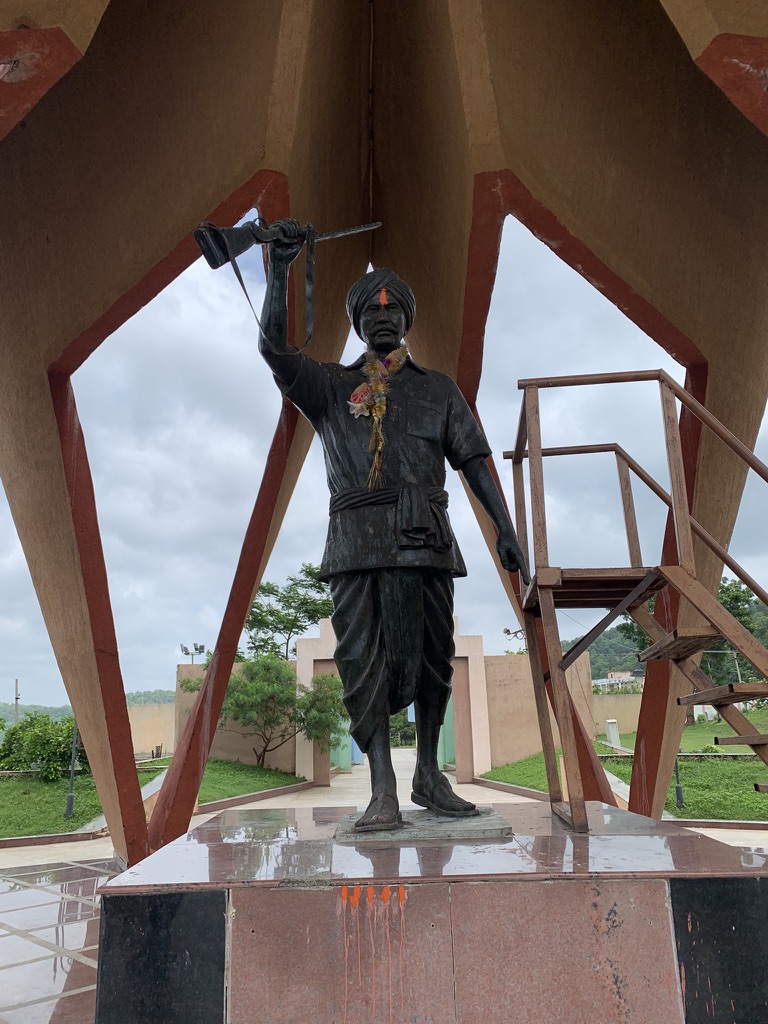

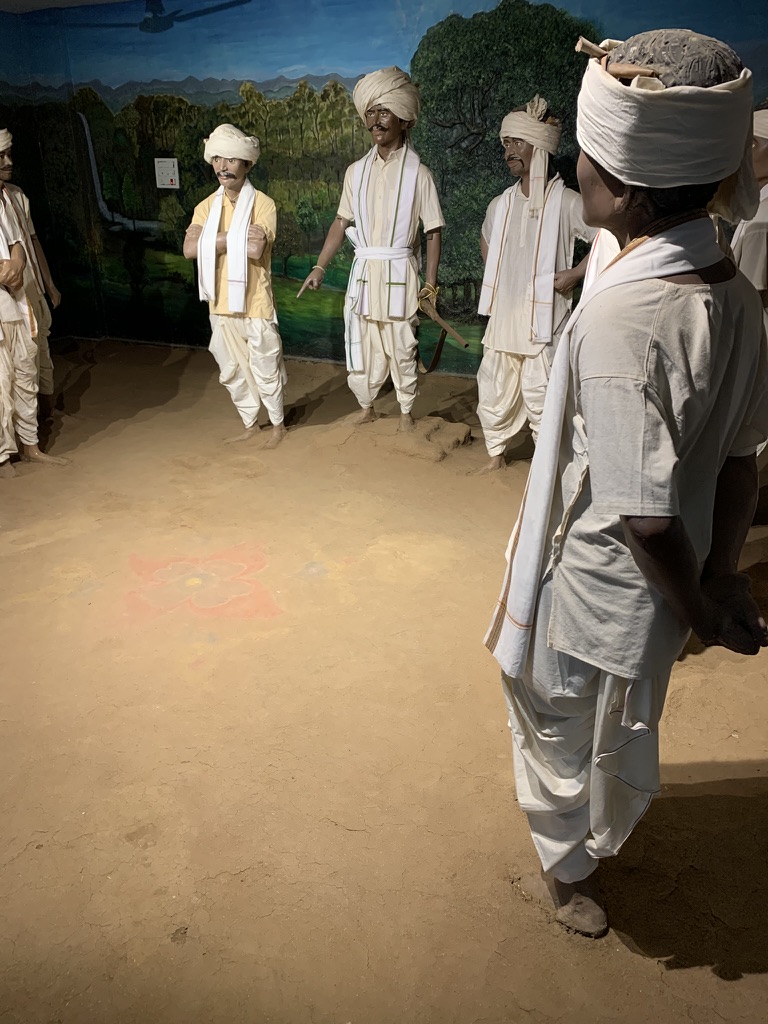
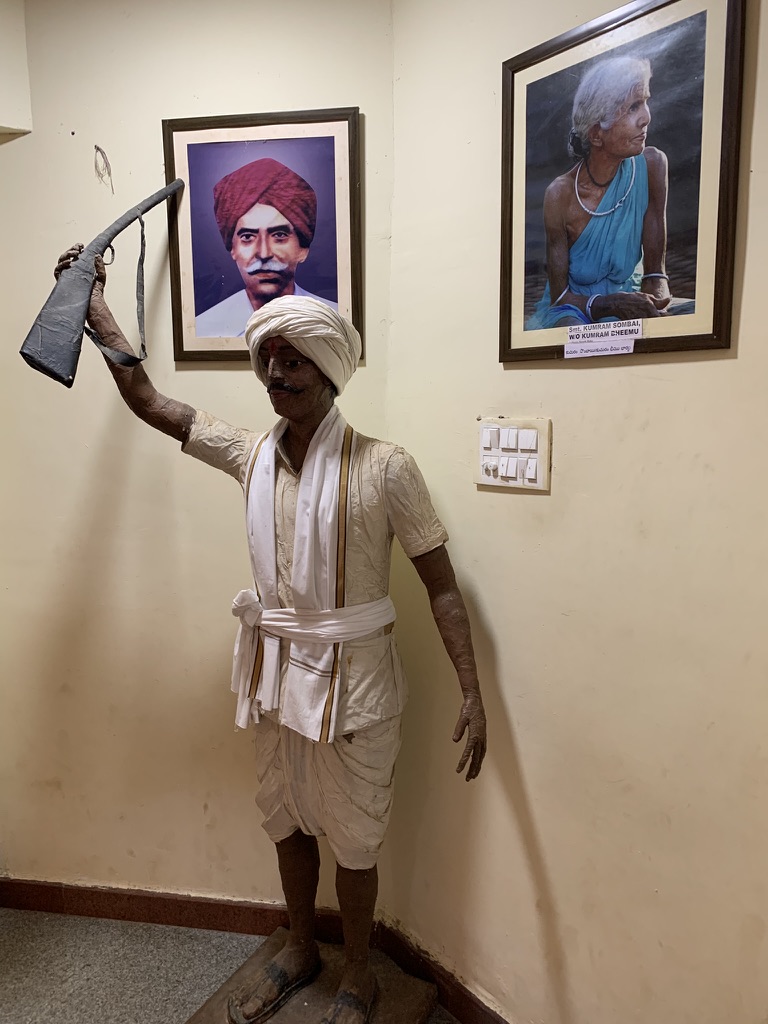





 Kumar Govindan's Words