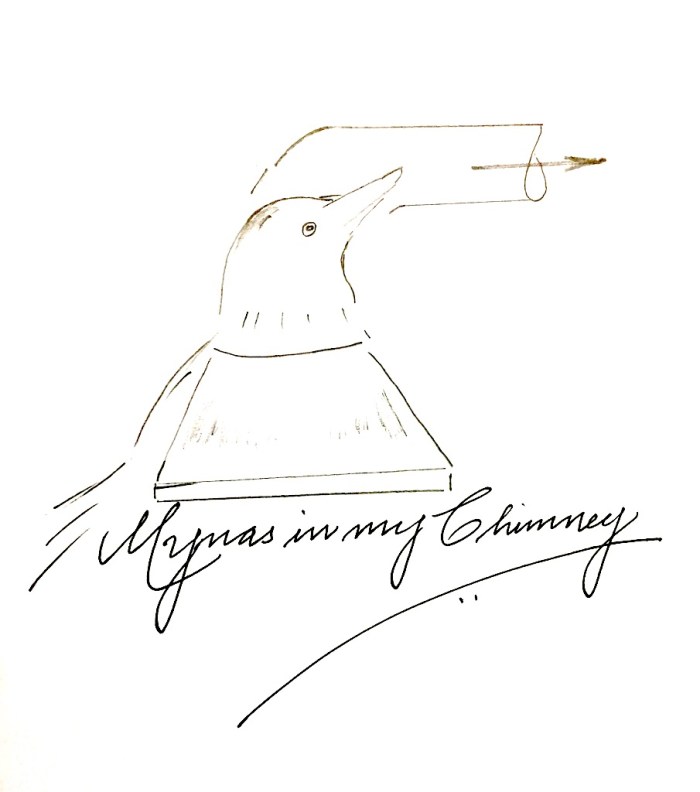
Mynas In My Chimney

Mynas.jpg

With Christmas around the corner, chimneys remind us of Santa Claus’s freeway path to delivering amazing gifts that we wished for during the year. Legend has it that Santa does an ‘Hanuman magic stunt’ here – reduces his size, and that of the reindeer-driven sledge, to miniature levels, enters the chimney, stocks up the stocking on the Christmas Tree and whizzes out with a jingle.

In India, the concept of fire-smoking chimneys is mostly dead in the cities and towns, which have now become electrified: we have smart looking electric chimneys with fans and ducts to suck out the oily soot of our start-from-the-basics cooking style. Mine, in my small Flat in the city of Salem, India, was installed when I first furnished the Apartment on taking it over from the Builder.

With my Garment Manufacturing Business located in the nearby Town of Attur, in the course of shuttling between city and town, my wife decided it’s best that the cooking be done at her Mom’s place – Attur, which does not have an Electric Chimney, but instead a distant cousin – an Exhaust Fan. Never mind the noisy relationship, this set-up resulted in us spending the work week-days in Attur and less time at Salem and in due course the visits became shorter and quicker. This left the Salem Chimney all to itself and perhaps quite lonely as we rarely switched it on during our fly-by-night visits. Talking about flying, maybe a flying animal species was silently spying upon us – time will tell!

During one of the brief visits I noticed the rumblings and makings of a bird-nest in the chimney exhaust pipe, which had a slotted angled cover at the end – big enough for a small bird to cleverly walk in and out, I guess. I didn’t give the ‘nest sighting’ much thought, and flew on.

It must have been a couple of weeks afterwards, when I heard the chirping sounds of birds making love in the nest or was it the nestling process – laying and hatching of the eggs? I wasn’t sure. I reckoned that they were having their kind of fun, which demanded my absence, and resisted the temptation to blow them off, by switching on the chimney!

Then, several weeks later, one cool evening I found enough time to hang-out in my Flat. And after an exhaustive nook & corner cleaning-up of all areas, except the chimney, I sprawled out on the comfort-hugging sofa for a much deserved rest. It was at this moment that I heard the first flash of wings fluttering inside the chimney duct, which slowly escalated and reached a crescendo. Fearing the worst (maybe a snake or a ghost) I called my next-door neighbor & his six-year old son, and together we put on a Sherlock Holmes act and concluded that it must be a bird, or birds. A strong clue was that my neighbor had, over the past few days, seen a bird, sometimes a pair of them perched outside the chimney outlet talking aloud about something gone missing. We proceeded to carefully dismantle the trapezoid portion of the chimney – disengaged it from the connecting duct, and rushed out of the Kitchen to the lobby connecting our Apartments. We found three lovely, almost grown Myna fledglings: one had fully developed wings and looked like it might fly-off any moment, while the other two had half-grown wings, with feathers yet to cover fleshy areas of naked skin. They were all stuck in the protective mesh, above the blower and obviously could not find enough strength to cover the almost three metres of exhaust piping to the outside blue sky. We reckoned that they took the wrong direction and dropped down.

This happened around midnight and we placed the fledglings in a cardboard box and my neighbor took it inside his House for safe-keeping. Moreover, he had just bought two parrots for his son and with the new additions to the family ‘bird farm’, the kid was grinning from ear-to-ear.

Early next morning when the first rays of the sun hit our Apartment we put the box-with-the-fledglings out in the sunlight and within minutes we had a serious visitor – the Mother Myna was staring at her babies from across the next Flat and calling attention to them, or maybe its partner too. Seeing this development we moved away from the bird’s view and hid ourselves indoors. The mother Myna was soon joined by the Dad Myna (I assume), which after a series of staccato chirps, flies away, only to return with a worm in its beak. Then after a few quick glances it dives to the box and feeds the worm to the fledglings and returns to its perch position next to its partner. Wow, what a pair!

The next thing we knew was that the stronger of the three fledglings has taken flight, leaving its two siblings behind to grow-up.

The Apartment Watchman then took over, putting them under his watch. I drove to Attur carrying the picture of the pair of dutiful Mynas searching, feeding and talking to their babies…long after the chirps were no more. Nature has a way of doing things! Mum’s the word and they are priceless!

How to Drive on India’s Roads

Driving2.jpg

I’ve been at the wheel, driving on many roads in recent times, swallowing kilometers and miles in the process, which has helped me gain an inside view — imagine seeing ping-pong balls the size of footballs — of the mind of a driver, on the treacherous roads of India. The rule-breaking and errors that people make in driving is egregious, which is visible in the record-breaking accidents on India’s roads; from the infamous road-rages of Northern India’s Delhi, to rash driving, down South; from the great asphalt-laden city roads to the dust-flying village roads, you have a width of stories to tell, and miles to write!

The simple Rules of the Road are ‘black-hole aliens’ to most people in India, who just don’t give a damn: Lane driving; following road signs & signals; flashing turn-indicators (No hand signal, please); loading vehicles ‘many tons’ over the limit, entire families – of between three and five, or more, riding on two-wheelers; using the rear view and side mirrors; and respecting the Rules… are at best ‘differentiation & integration equations’ on paper. People drive with the one clear objective of moving from point A to point B, as soon and as selfishly as possible, and without waiting a second…mind it!

I’ll break speed here, park ‘normal road rules’ aside and ride the National Highways to explain ‘road sense’, in driving. I find that most people, beyond a basic level, do not know (or have forgotten) finer aspects of road discipline, designed to keep them safe — on and off the road. A friend of mine living in the US and visiting India, remarked, ‘Kumar, you know you are alive only when you safely return Home, in one piece!’ I would add: from a killing (and thrilling) adventure on the roads of India.

We are up to the brim with education, so much that we fail to learn and apply much of what we’ve read! This is an attempt to make you a ‘learned one’ on driving on India’s roads, and refresh at a pit-stop: often we take so much for granted that it pays to make a backward glance, to re-learn, which might help us focus better when driving. The multiple Government websites offering ‘Road Rules’ information might be awfully confusing and seemingly complex.

I’m not driving into the universal road signals of, Red, Amber/Orange and Green, which I’m sure you know only too well. I would say, Red is a Full Stop; Orange is an Exclamation or maybe a Question Mark — wake up, get ready! (take a deep breath); and Green has no punctuation, at all! This is going to be a long drive; fasten your seat belts. Here we go.

India drives on the left-hand side of the road, with a right-hand drive vehicle — where the steering wheel is on the right-hand side. Countries like Britain, Japan, Australia drive like us. The USA drives on the right-hand side with a left-hand drive vehicle (which might explain Donald Trump’s behavior — always on the wrong side!)

Lets first lean-in to the definitions: A lane is part of a road that is designed for movement of a single line of vehicles in any one direction. Multiple lanes are provided, on wider roads and expressways, to spread traffic, guide and control drivers, and reduce traffic conflicts.

Lanes are marked by ‘war–paint’: white paint on the black asphalt in the form of solid or continuous lines. Yellow is also used, for better visibility.

A two-way, two-lane road is one that allows driving in both directions but may not be wide enough, in many places, to allow vehicles to pass/overtake one another. Normally, a two-lane road has only one lane in each direction, and usually no median barrier and may be divided by a single or double white or yellow lines, which in turn may be solid or broken.

A four-lane highway has two lanes for driving in either direction, divided by a clear median barrier or an island (often we find goats, buffaloes and cows tethered here, for keeping the grass in its place!). Similarly defined are six-lane or other multi-lane freeways or expressways.

On entering an Highway on a four-wheeled car, the correct thing to do would be to keep left — on the extreme left lane and drive at a speed within that indicated by the speed limit indicator signs (if any) on the Highway (else push your memory — we normally have a speed limit of about 60 to 100km/hr). When you come upon a vehicle moving ahead and you wish to overtake/pass you may do so carefully from the immediate right side lane; you may ‘wake up’ the Driver ahead with a mild warning blow of your horn or by flashing& dipping your head-lights, at night (whether the guy actually sees you at all, is another story). Pass over as quickly as you can, and gradually get back to the lane you just left behind. This is to allow other drivers, driving faster than you, to overtake on your right side.

Once you are safely driving in your lane you will notice a thick solid white continuous line on your left marking the the edge of the road, and perhaps a little more of the asphalt road before it meets the brown dirt or green grass of the Earth. This narrow lane is meant exclusively for two-wheelers and they are not allowed to get into your lane, nor should you into theirs. If instead of a solid white line you see a solid yellow line, on the edge, it means you are not allowed to stop and park on the sides of roads thus marked.

Driving on, if it’s a six lane Highway it’s best to stick to the middle lane allowing slow-moving vehicles to snail along on your left and fast moving ‘cheetahs’ to overtake on your right. If it’s a four lane Highway just stick to the extreme left lane. If you decide to take a right turn or a U-turn you should cautiously move to the extreme right lane using your flashing indicator lights and wait for the signal at the intersection.

What do the various kinds of ‘War Paint’ (that’s my name for them) — lines painted on the road, mean?

On a two-lane, two-way road if you see a single or two parallel continuous white lines — called a barrier line — at the center, dividing the lanes, you should not overtake in this area; if you see a broken line it means you can ‘break the line’ and pass in the marked area. Broken white lines are generally lane separators and though it’s best you always stick to one lane you may consider promoting yourself on the road. Sometimes you might see a broken white line changing to a solid white line, where it means you should not overtake in the solid line area.

Right of way: While approaching an intersection always give the right of way to vehicles already moving on the road. In other instances you should proceed only after giving way to vehicles approaching from the right side of the road. Pedestrians always have the right-of-way at pedestrian/zebra-crossings, that are not controlled by a Traffic Signal. This means if you are driving on a Highway, and up ahead you see a person step-on a marked zebra-line crossing, you just cannot honk him out of your way (or think you have the right to mow him down); you have to slow-down or even stop, wait for him to cross and then drive on. Respect the pedestrian at all times — he fully owns the zebra crossings: no questions!

A double yellow line painted in the middle of a two-way road should never ever be crossed.

If you spied a single yellow line next to a broken yellow line, and if you are driving on the side of the solid line you cannot overtake and if you are driving on the side of the broken line (on your right) you can overtake/pass-over.

Broken white lines indicate that you may change lines overtake or make a U-turn.

A Stop line is a transverse line painted before the intersecting line — better start seeing this line as often as you can!

Yellow box junctions, diagonal crossed lines: Vehicles should cross only if the driver sees a clear space ahead of the box; you cannot stop, even momentarily, inside the box — keep moving!

Bump-to-Bumper distance: Keep a safe distance, say 1 to 1.5m (metre), from the vehicle in front – You may have to adjust this distance in keeping with the culture of the area you are driving-in. The single most cause of many accidents is due to the driver in front suddenly braking and you being ‘unable to control’ spilling into his rear. The consequences maybe humorous, though! Always make a quick glance on your rear view mirror before applying the brakes — whether you do it suddenly (best avoided) or gradually, and make sure your brake-lights light up red, so that the driver behind you, at your tail, knows that you are slowing down or stopping.

Honking: It’s best you don’t use this at all, and always to a bare minimum. While in Puerto Rico on a over six month job assignment I got myself a Learner’s License — for driving to work, and used the opportunity to drive around the pretty Island (long before Hurricanes snaked–in), on the weekends, and to consciously follow Road Rules (being in a foreign Country you would like to be on the right side of the law). This phase of my life taught me to shut-down the impulse to honk, which I dutifully carried with me back to India; where you are considered crazy if you do not use the horn. I would say keep you paws off the ‘sound horn’ and use it only to alert someone on the wrong.

A word about speed-breakers — those irrational, ugly humps on the road: The Indian Road Congress specifies, among other things, that a speed-breaker should be 3.7m in width and 0.10m in height and should be clearly painted and marked with warning indicators. But, this is never the case and people freely break the Rules making their own speed-breakers, in their own localities (not permitted on the Highways). You should try your best to get them down to specification or removed altogether; complain to the police; sound the local community; whatever, do your best to contribute to a cause.

A suggestion to the Government: It’s time that the Government(s) at the Centre and at the State assiduously and religiously enforce already written-down Road Rules — so strictly that we start thinking about how to change them, for the better. Introduce Highway Patrols — populate all Highways with Traffic Cops for a month — to teach & correct Drivers; then give them another month’s time to learn and absorb; and after that, in the third month, impose on-the-spot stiff fines for every rule broken! Other suggestions would be: Ruthlessly evict all illegal ‘road space hustlers; introduce world-class signage and warnings. ’If we can bring military discipline on India’s roads, we will suddenly discover that we have the widest, longest and best roads anywhere in this part of the world. Lets do it!

At the end, you might feel overwhelmed following all these Rules, to the book, as the irrepressible Truck Drivers hug the extreme right lanes and also hijack the extreme left lanes forcing you to snake your way across to your destination — hopefully without spitting venom! But then, we got to start some where and Democracy works best only when everyone practices self-discipline and makes an effort to do better than the rules.

Finally, always give the right-of-way to Ambulances — you might just save a life. Driving is an activity which requires mindfulness, your fullest attention — give it. With a New Year looming up ahead in the distance make a, ‘I-Will-Strictly-Follow-Road-Rules’ resolution. Merry Christmas — give Santa’s Reindeer driven Sledge a right-of-way in the skies, and wishing you a Happy New Year 2018.



The Retired Headmaster

TheHeadMasterF.jpg

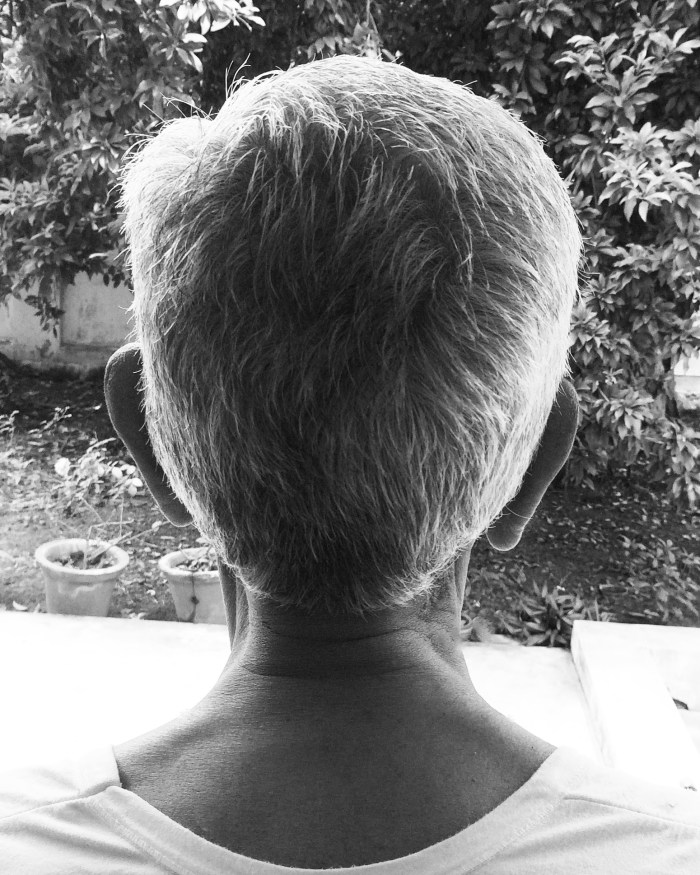
He is nearing 85 years and there are as many lines on his face as the number (over fifty) of the Schools he claims he had newly started, or opened – while in Government Service – as a School Teacher, Trainer, Inspector, and Headmaster. The forest of blazing, almost dusty hair – a handsome crop – is as white, though co-mingled with silver streaks, as the chalk he must have used on the black Indian School Class Boards. He wears no reading glasses and his eyesight greatly improved after the cataract operation he had undergone about a year ago. He could read the tiny letters of the daily Newspaper with large effortless ease. He has a slight stoop, but carries his medium frame lightly. He had broken his hip twice – the left, and the right side – over a period of three years (you guessed it – in the great Indian bathroom of my earlier Article), and after steely replacements they are reinforced and stronger than before: stand him in good stead to carry his weight through the rest of his journey.

The School Headmaster was born in the year 1933 in a village, near Rasipuram, Tamil Nadu, India, the youngest of three siblings – an elder brother and a sister, both still around, outliving their respective spouses. His father was a ‘Village Munsif’ (Head), who had built the Village’s first two-storey brick & mortar House and made sure the youngest son went through School to become a School Teacher, and eventually retire as a Headmaster in the year 1992, with a very impressive (I’m jealous) Government pension.

During ‘School period’, the Headmaster packed & unpacked his school bags, to work and live in the Tamil Nadu Towns or Cities of, Musiri, Arcot, Naganeri, Nagapatinam, Chennai, Gangavalli, Harur, Vazapaddi, Salem, Puthuchathiram, Pattanam, Ittamozhi, Mannarkudi, Attur, Ethappur, Gangavalli, and finally Mangalpuram, from where he retired and hung up his chalk and duster and Inspector-Raj work. Along the way he married, and his wife dutifully followed him through all these exotic (he said they were) places, except perhaps when the two sons – one in 1960 and another in 1962, were born.

The Headmaster was outright frugal and deadly scrupulous with his money, minding and managing it wisely: saving as much as he could, and investing in property. The saying, ‘a penny saved is a penny earned’ was spot on in his case. He was clever enough to mostly use ‘other’s transport’ (somebody needs company, right?) to get around the maze of family functions and events. He never ever bought a four-wheeler for driving about and the nearest was a moped, which he rode for a couple of years and retired from it. He briefly ventured into the bore-well business, but quickly exited when the water went deeper and the returns were not surfacing well enough. Later, in the early years of retirement, he even started a Primary School with like-minded colleagues, but gave it up when senility started catching up with him.

Once retired, the Headmaster partitioned his considerable earnings, and wealth created, extremely well between his two sons. He gifted Land & House – one each, and more – to each, and chose to live in a simple sparsely furnished rented House nearby, on his handsome pension. This awesome act of his provided a ‘super-strong foundation’ and served as ‘good insurance’ for his sons to grow their respective careers and become financially independent. I’ve never seen a Father do so much for his children, with so little. Recently, one of his grandsons flew to Macron’s Paris, with Parents in-tow, to get married to his lady-love, in a Yacht, on the River Seine, on and under the decks, overlooking the Eiffel Tower. Though he always wishes that family members return and live in India, he blessed the tuxedo-clad and lace-gown-wearing newly-weds from afar! They take his seed, and story, to the heart of Europe and beyond!

Over the years, as I grew older, I’ve been watching the Headmaster grow older, become senile and suffer from memory-loss. He is extremely forgetful of the things that do not matter to him but displays razor sharp memory to things that outright matter to him. He could reel-off a long hymn with mindless ease. He has kept most ailments, typical of his age, at bay. Left to himself he would gobble any amount of sweets; adds at least three tablespoons of pure white sugar to every meal, adds it to the rice sambar, adds it to the idli & dosa, adds it to the pongal, adds it even to noodles… I tell his wife that that he must be eating a ton of sugar every month and it’s awfully surprising that his body takes it all – despite every known medical advice, to the contrary. However, it does show-up in his brain becoming blunted – maybe he doesn’t realize it (‘My Dad did not tell me not to eat so much sugar’, he argues), and I just told him so. God works in mysterious ways–in balancing the sugar levels, I guess. Talking about Gods, the Headmaster’s favourite God is Muthu Mariamman living in a Temple nearby. He never fails to extol her prowess and virtues. He claims to have been instrumental in building the Temple, in the locality. He authored a small little book on paeans to the Goddess, which he reads every day and offers a copy to visitors. Whenever he prays at the Temple, he returns with the holy ash and offers it to me saying, ‘I prayed for my sons, their wives, my grandchildren, for you & your wife, your son and your parents’. Wow! That’s a more than a chestful.

The Headmaster is fastidious about locking every ‘sun-light opening’, window, door and gate of the House after 6 pm, and switching off unwanted lights. He carries this out religiously, persistently – wherever he is – like a man possessed, often homing-in to tug at the lock and check if it indeed holds. Safety is paramount to him, when the light of the day fades and darkness beings to shine! I joke with him that he must have been a one hell of a security guard in his previous life!

When people visit him, the Headmaster endlessly, repeatedly – to the point of sheer boredom, talks about the many Schools he started, and the Collectors and Doctors he made out of young boys & girls…and keeps playing the same tune over and over, like a needle-stuck in a yester-year Gramophone. Or, worse still, he parrots the wise old proverbs such as, health is wealth; God is great; early to bed, early to rise makes a man health, wealthy and wise… When I take him for a ride in my car he never fails to point out, ‘see, I started that school in 1980, and the one over there in 1981… and it goes on, again and again!

Beyond all his peccadilloes & eccentricities, what shines across is his ‘harmlessness’; his complete non-dependence on anybody outside the family; and the beautiful chemistry he has with his wife. She is always beside him, constantly at his beck and call and does everything for him without a fuss or adding an extra line to her equally wrinkled brow. When he is at the height of one of his ‘high moments’ she gently calms him down, chides him or just brushes it off with a smile. She works and slaves tirelessly for him, with the sincerity of a devoted wife oozing through every pore of her body. On his part, he guards her zealously, like a prize trophy, seeing to it that she doesn’t overwork herself – for others, and on things that don’t affect him. Without his inseparable wife, I wonder if the Headmaster could even survive a day! I often tell people that there is none more qualified to conduct a Wedding and bless a newly married couple, than the Mrs & Mr Headmaster Couple! They are an example, in a certain way!

The Headmaster has spent over 20 years – since his retirement, doing almost nothing at all: just living; starting blankly into the blue and white space; shuffling between chairs and beds; walking over to pray at the nearest Temple; testing his eyesight on the newspapers and the latest release of the Pensioner’s Magazine; and of course locking windows, doors and Gates! He insists he doesn’t like Television, but watches regional serials on the sly! While his wife continues working: cooking, taking care of his every personal need, giving him the few medicines he swallows every day…in a never-ending job. Self-abnegation at its best! For some there is no retirement, is there? I often tell him, you can retire from a job but can never retire from life. I wish he could have continued done something worthwhile for his age and experience. I reckon his is a well-deserved retirement; maybe, he is one of God’s chosen few; without any financial and physical worries – of the mental worries department, I really don’t know!

Disclaimer: This is a fictional story loosely based on the ‘ground realities’ and any resemblance to any living or dead person is inadvertent and ‘luckily’ a coincidence.

Breaking Bones

BreakingBones


Is the Indian Bathroom the most dangerous place in this part of the World? I believe so!

Over the past many years, the most consistent geriatric distress story I’ve ever heard in South India, is that he/she slipped in the Bathroom and broke a bone, twisted a frame, pulled a muscle; or maybe even kicked-the-bucket! Growing up from an open-defecation Regime of many years, that’s some measure of progress, I guess! Maybe, we couldn’t find rocks (of Gibraltar), branches of Banyan Trees for support, in our otherwise steady flag-hoisting marches to the Bathroom.

Our small world broke-down this early September, when my Mom-in-law crash-landed in the great Indian Bathroom. My wife & I, run our Garment Manufacturing Business out of her sprawling House in Attur, Tamil Nadu, India — lying mostly uninhabited since the death of my father-in-law — and as a natural consequence ‘she fell into’ our care! You might say that we, in turn, fell for the ‘occupational’ hazard!

On returning from the Funeral Services of a dead family member or a friend, it’s a traditional custom in Tamil Nadu (and perhaps other Indian States as well), to take a head-to-toe bath and clean up before we enter the House. The intent being that we shake ourselves off the burial and cremation dust and enter Home in a ‘pristine physical state’. The clothes used, at the Funeral, are also washed during the session, or at least soaked in water — else no one is permitted to touch-them (If not, you use a stick to take down the clothes hung in an isolated corner and put them in water for the wash cycle — at a later time). The rigidity of the custom varies across communities. Most often, there is an outdoor or an out-house bathroom — tucked away from the main House — sufficient enough to cater to this kind of program.

My Mom-in-law, all of 74years, pale, fragile and very much a skin & bone figure, had just returned from a Funeral Service, on a rain-filled slippery evening, and marched to the ‘Out-House Bathroom’ to divest herself off the after-effects of the death she had just seen. Maybe, I had a premonition of things to come and told her to sprinkle some water on her head (that’s a clever short-cut to bypass the ritual) and use the ‘inside’ Bathroom — which she knows so well. Wedded to custom, she vehemently shook her head and marched on! No one was watching, but then, we then heard the Aaah’s and the Aiyooh’s and the sound of a frantic crawl to unlatch the bathroom door. The rest, they say is history. The local first-aid diagnosis said it was a ‘right’ hip fracture: broken femoral neck — bone breaks off the femur ball head — and immediate surgery was the only solution. We joined the chorus of the almost the everyday wailing Street Ambulance Sirens and headed to Ganga Hospital, Coimbatore for doing urgent repairs, in the dead of the night. Ganga has a reputation, in these parts, of making whole, broken fragments of bone and breathing flesh into them.

We streamed through the neatly laid down Hospital procedures, filled with X-Rays, Scans, Blood Tests, Intensive Care Surgery and after almost two painful weeks, Mom-In-Law was back at Home with a new steel ball head and attachment bored into the femur bone: old people don’t wait for bones to get–together, instead they are enough spare parts, available off the shelf, to replace them; but then, the flesh will heal only with time. There she lies on the bed, legs spread apart (else the steel ball may pop out), challenged by a Physiotherapist twice a day who coaxes her out of her air-bed and tows her, tip-toe on her broken side, within the confines of a Walker on the healing road — signal free, lights flashing.

Meanwhile, being awfully poor in post-surgery care of this kind, and having a Business to run, we cry for help. Mom-In-Law’s elder sister, who having serviced two broken hips (Left & Right of her dear hubby) over a recent period of two tiring years, and with a wealth of wide experience between the hips, joins us to provide the healing touch.

Veering back to the typical South-Indian bathroom, they are fertile ground for flesh & bone earthquakes, being always flooded with the likes of Hurricane Harvey, Irma and Maria, I would issue a Category-5 warning before entering one!

This is one private place which we in India should diligently westernise, ensuring a dry bathroom at all times; with a Shower cubicle to hold the spills and sufficient hand rails placed at vantage points for the elderly; maybe even hire a gerontologist to share some design tips and a judo specialist to how to fall without breaking a bone!

Robbers and Detectives

RobbersDetectives.jpg


“Why we need a ‘desi’ Sherlock Holmes or a Hercule Poirot: maybe a real Shankarlal”

I have a distant relative – almost a friend, living close-by my Garment Manufacturing Unit in Attur, Salem District, South India. He had recently built himself a fabulous, independent two-storey House – a Bungalow in the true sense, on the Chennai – Coimbatore National Highway. I used to drop-in once in a while to say ‘hello’, talk about business and get friendlier. He and his wife were childless for a long period and after a ‘huge medical & personal effort’ they produced a handsome son, who grew up to neatly go into Medical College (before the NEET era). The House was built in an out-of-Town area, ‘guarded’ by a Polytechnic College in the front and an Arts College across the Highway. Buildings on the adjacent plots were in the drawing-board stages and were barren and lifeless. Safety aspects did cross my mind – the house being out of ear-shot, every time I visited them, but the couple seemed alive and out-of-jail on the issue, and I brushed the thought away.

One dark early July night, well past midnight a gang of four clever Robbers – wearing the now mandatory face masks – who had apparently been tracking the Chit-fund activities of the House Owner for a long time, found a nice ladder to help themselves on to the terrace, break open the Door and slip inside. The couple sleeping on the ground-floor heard a loud thud and the man of the House whacked it away saying that it must be the noise of a mighty-big accident on the nearby Highway (happens all the time), but the wife woke up and switched on the lights of the staircase leading to the upper floor. That was a signal, which brought the Burglars hurriedly down to confront the couple. The wife had the presence of mind to tell her hubby to pullout their Gun (they indeed had a unloaded licensed Gun) but the Invaders made lightening strides and quickly struck her down. Then, they tied them up, and with daggers-at-their throats, asked to be shown where they stashed their collection of gold, silver and cash. They found cash: 4 Lakhs in a drawer, and digging into the collection of silk saris, another 3 Lakhs in the folds. Next, they moved into jewelry: not convinced by the gold-covering bangles offered by the Lady of the House, they took her mangalsutra (sure gold in there – we are sentimental about that, aren’t we?) and other ornaments totaling about 40 sovereigns (The next day’s Newspapers reported as much, but I reckoned it might be much more). Meanwhile, the man of the House was pouring sweat – while shouting out to them to take what ever they wanted – and looked like he would collapse. The thieves were Doctors enough to get him his blood pressure medicine, call the lady-of-the House to warm-up some water and administer him to a healthy sitting position. Finally, they took the couple’s mobile phones, car keys and filed into the Owner’s Skoda car – parked in the driveway – with the loot, and showed a clean pair of wheels!

It’s unclear how the couple untied themselves and got help, but by then the Car with the booty had vanished and became untraceable…still is, for almost three ‘clueless weeks’ since the incident.

The next day’s vernacular newspaper’s ran the story, and being a devoted reader of the English Times Of India; Twitter feeds; theSkimm; Flipboard…and others OUTSIDE INDIA; besides watching CNN, BBC and the kind on TV – damn the local SUN News, Daily Thanthi etc, I missed the robbery altogether, and when I happened to call-up the relative two weeks after the incident, I found myself completely at sea, with pictures of Melania Trump, Duchess Kate Middleton swirling inside rather than PM Modi or Edapaddi Palaniswamy or the locals. Wow! I conked myself on the head for being so much ‘abroad’ and foreign in my own land rather than mindful of the local news and the neighbourhood. I momentarily forgot to recall the lessons of Japan’s Tokyo – one of the safest cities in the World, with hardly any noteworthy crime & theft happening – where safety hinges on local policing and being a cohesive society, with a strong collective identity.

I reckon there is a lesson in this story, and the obvious ‘Elephant in the Room’, is where are the Detectives? What are the crime deterrents in our area? Is the Police force competent enough, if they were indeed, why has no one been apprehended till date – even the car has not been traced and found. I wish, that instead of the many Engineering and Arts Colleges one sees educating the population along the National Highways, we have Crime Investigation and Detective Training Colleges to produce our own versions of Sherlock Holmes and Hercule Poirot –they might have been heroes of someone else’s stories, but we can make them real! In the days of Tamil Author & Fiction Writer Tamilvananan, I was a fan of his detective hero ‘Sankarlal – the nearest to the super sleuths of the West!

Don’t we need a parallel private Detective Force, which can coolly complement non-existent Police skills?

Research tells us that the fear of getting caught is the best deterrent against crime, more than a behind-the-bars jail term (where one may have friends with benefits and spend quality vacation time). Beyond all this, we need to stay watchful and mindful, don’t we?

Last heard: my friend was installing (Tata) steel gates in front of the breakable wooden doors, CCTV cameras, touch-sensors, burglar alarms and the kind, to make it a formidable fortress. Meanwhile, reading the local Newspaper (I’m more learned now) I learnt of a similar theft, a few days ago, in nearby Erode, on a House of the same dimensions…the story goes on! It’s no ‘mystery’: Tata Steel is back in business!

Sleeveless in Salem

SleevelessSalem

I’ve always been fascinated with good, clever, stylish, ‘chic’, ‘open’ – but decent dressing, especially by the fairer sex. Boarding School life helped keep the pinafore School Girl skirts ‘always up’, in the mind, and as I rolled into University I naturally tracked the best-dressed Ladies (with a small eye leaning-in on the Gentlemen, to improve upon my own sartorial tastes). I still remember having kept a careful watch on the College catwalk and hold vivid images, to this day, of those that hit that beauty-is-in-the-eyes-of-the-beholder eye, hard with cut, style and colour. I recall, some dresses, on some, never repeated over a 365 day period! Wow – that’s a lot of bird-watching time spent. I wish we could invent a means of transferring these images to a Mind Cloud and then printing them black & white or colour! Glad, I successfully passed through College without having to tear-up my clothes, in despair over my marks!

Over the years, as I travelled all over India and abroad I’m sure I imbibed a fair sense of fashion and now being in the Women’s Apparel Manufacturing industry my dreams run wild. Fashion TV filled-in many desert spaces with Oasis’ of green and rainbow colours. One style that beguiles and enthralls me is the Sleeveless Top and Sleeveless Sari Blouse, mostly on women! While the North of India has seen and shows-off much of this elegant, harmless style, the South is fighting awfully shy – steeped in endless prejudices and taboos. The Sari-blouse, for example, actually shows more than it hides, yet a ‘sleeveless blouse’ remains an unthinkable garment to many down South. When I challenged many a women on why they should not go for it, the answers were pretty weird: My Husband will not allow it; my In-laws will not allow it; oh! what will my father think; no, we cannot wear such a revealing dress; my arms are too stout and will show-off much of what I still want to hide behind a skimpy blouse; I don’t have a Model’s slender well-crafted arms…list is endless. I even argued that if India’s first Women Prime Minister, Indira Gandhi wore sleeveless blouses (on perfectly matched saris) with such elegance and carried if off with knock-down style, why can’t you? Well, modern-day Ivanka and Melania Trump’s have heard me and wear the sleeveless with Donald Trump abandon. On the sidelines, I’m trying my best to get my better-half into one of them – without success and bitter failure!

In Salem, Tamil Nadu, South India, where I now live, you do get to see the odd sleeveless – is a rarity – but there is too big a Permission List to pull-off the sleeve. Maybe, Indira Gandhi would have enforced a must –wear-sleeveless Emergency?

This is just one example, and Women in the South need to wake-up to the wonder of a wonderful range of beautiful dressing – without inhibitions! Women’s Kurtas, Tops, Shirts, Tops and the kind look equally good without the sleeve, or with cuts & slits, and wearing them is an opportunity not to be missed. I trust the great Indian Culture, will provide the checks & balances on any misadventures or is this the real problem? Meanwhile, I’m sleepless over being ‘Sleeveless in Salem’.

Openly Pooping in India

OpenPoop

With the Indian Government openly going overdrive in making India open-defecation free, building toilets and upping the ante on cleanliness and sanitation with its ‘Swachh Bharat’ clean-India mission, my thoughts ‘went down’ in place and time, to delve in to my own, noisome, pooping history: re-live the relieving in the open!

I was born in the 1960’s in South India, during a period when electricity was just beginning to line-in into the small Towns but staying absolutely fused-out of the Villages; and toilets/rest-rooms/bath rooms were yet to be understood, and acquire meaning and quiet dignity. We were a poor ‘rising-up’ farming family and did our best to fertilize our fields with the worst that we could not hold within us – after digesting the best food of our times! I had never seen a toilet until I climbed the nearby Shevaroy Hills Station, Yercaud, to live as a stay-in guest with an Anglo-Indian family – to grow up sufficiently, to join Boarding School. That was at the tender age of three. It took me a while to find my way in the bath-room, beginning with the squatting style, and later graduating to the Western sitting position. I must say that I first squatted on the seat of the Western Closet before realizing that I have a right to indeed sit on the cold seat throne!

On returning from Boarding School, on the first School-end holidays I found that my family had relocated to an interior Village, near a forest–without even a volt of electricity, and with lots of earth & rock to sit upon, without charges. The toilet now looked farther than ever before, given the scenario of abundant bushy spaces around us, and the complete indifference to the farming community about defecating in the open. Every year, it was a nightmare when I came Home; to rush to the fields many times a day to do the ‘ones & two’s’ and play hide and seek with shrubs and bushes. The scariness level of the nightmares depended on the crop at that time of the year: if it was tapioca it was a pleasant shady sit-out; if it was sugarcane, I had to hunt for space to squeeze in and squat without being bruised by the sword-like sugarcane leaves. During these times I got the closest to Nature, that I possibly could, and became friends with armies of ants, webs of spiders, leaves of caterpillars, lengths of centipedes and millipedes, and fangs of snakes, tails of rat, and a sting of bees and wasps! On one of those stomach crazy rumblings, I had rushed to the nearest field – damn, it was sugarcane – and almost squatted on a coiled afternoon-nap taking snake, when the great hiss stopped the poop in its tracks, actually went back-in to exit again – hissing with smelly disgust, another time!

Over a period of twelve long years nothing much changed on the open poop front at Home, but it got a lot more crowded and competitive. Some-times, I found a ‘poop-mate’ (a Labourer’s son about my age) and both of us used to squat back-to-back and talk about Tamils songs and films. When it was done, my poop-mate would often use the nearest rock as a toilet paper – a few quick crafty rubbing strokes did the job – while I used to get up, pull-up my shorts (just enough to cover the bare essentials) and walk bow-legged to the water tank area to find a tin-mug and a secluded spot to cleanup! Meanwhile, I left Boarding School went through Engineering College and got a job in the Power Sector further South of where I was born: still not toilets at Home, though by this time I had become skilled in using toilet-paper. My many pleas and cries always fell on ceramic deaf ears! Who would give-up the fresh vibrant landscape of the open for a walled toilet, argued my family! The nearest we got to a toilet was a four-walled open-to-atmosphere bathing-only room, with a firm door, which also served as a wash-spot after the adventures in the open. I heard tales of a cousin of mine joyfully parking himself atop the ‘bathroom’ wall, refusing to vacate even when the women-of-the-house (Moms & Aunts) came over for a bath! He had to be pulled down in a bundle of kicks and punches. Those were the mud-walled roof thatched house days, when concrete structures were more than a peep away. Most men wore lungi’s or dhotis, and the women, saris, which gave absolute freedom to squat just about anywhere, maybe lift a leg and do it doggy style!

Then suddenly, as if someone understood my anguish and heard my cries, toilets started popping up in the neighbourhood – but outside the House and in the typical Indian squatting style, without a flush; but with a tap, a bucket and a mug (The Indian Railways had them chained to the water pipes). But, it never got built outside mine…I still had to find space (sometimes invent) in the open.

Years rolled by, and it was time to find a bride to share open spaces of the mind & body and get close. I demanded that we build a modern house with inside Toilets – just like the West. I got a plan made and ensured it was built exactly that way! Wow, that was in the year 1990! But even then it wasn’t without a fight – my Dad questioning the large room size and why I required a wash-basin inside the Toilet (He wanted to save on the fittings!) and I had to do a lot explanation about washing hands & hygiene, to get one; but I never told him I intended to install a bath tub, one day!

Over the years, when I travelled all over India and to a few places abroad, I learnt the pleasure of closed defecation and struggled to understand why such a convenience (and a ‘pleasure’) took so much time to invade India.

I now live in the small South Indian City of Salem and it is not uncommon to see many roads lined with blind-snakes (we used to call poop that, while in School) and during my morning walks I often run into people squatting or peeing gleefully, just about anywhere they could find a spot; and during those rides to home, while passing through a small Village you could see man, woman & child, torch or lantern-in-hand (a night) squatting on the road-sides in the light of my car head-lights. I shamefully dip them and cover up! Tomorrow is always open!

A Plan for a Great India

IndiaPlan.jpg

Prologue: I first wrote this Essay in the year 2012, when India turned 65. I’ve kept the age the same and tweaked it a bit to publish it again this year – 2017. Have we improved? Be my guest!

Over the years it has been a personal, and perhaps a public one too, revelation that the best ideas pop out while in the shower or simply resting in the ‘Rest Room’, managing the in’s & out’s – mostly the latter – of the human body. Archimedes got ‘his water-floating’ idea in the bath-tub and went ‘virally naked’ with it – getting truly well deserved attention. I got mine this morning, sitting on the WC and am coming to you with clothes ‘fully-on’. Einstein said imagination is what really matters. Well, I do not disagree.

India is a 65 year old, under-developed baby with rich ancestry and cultural traditions. It is crying for attention in every dimension: mind, body and soul. Good governance is at an abysmal level, graft is at Mt. Everest heights, National discipline is stuck in a Peter Benchley ‘Abyss’ and the traffic in every sphere of the common man’s life is so thick & dense that everyone is looking for the smallest possible opening to charge into – despite flashing red lights. Elected Representatives are abdicating their responsibilities the moment they seize power –branding all of us as Maoists (including simple-minded Farmers) and we in turn look at them as Nazis, or Fascists, or weird Dictators. Believe me, Hitler and Mussolini – and others of the clan – never actually died!

Good honest citizens, such as me, have tirelessly ‘tweeted’, posted on Facebook, and blogged fertiliser, power-grid hungry ideas in the ‘windows of time’. Gandhian Annas (elder Brother), Babas & Yoga Gurus are giving their best possible twists & turns and indulging in various ‘fast’ techniques to enlighten and ‘rub-on’ all of us. I guess we are listening, and perhaps many ideas are ‘breaking’ and ‘streaking nude’ across that wonderful mind of ours!

Well, I have a dream; I have a plan, for a Great India; read on.

The President of India, the Prime Minister (PM) and the Chief Ministers (CM) of all States should be elected directly by the people, in addition to the Members of Parliament (MP) and Members of Legislative Assemblies (MLA), in a party-less manner. Yes, there will be no Parties and Party (and Symbol) based Elections and everyone will have to ‘cat-walk the mighty ramp of India, strutting their valuable assets’ to get noticed. Only like-mined ideas should be allowed ‘to party together’ after the Elections. Every candidate should win an Election on the strength of his/her character, integrity, skill and ability to govern and get things done.

The President shall remain the fundamental monitoring Head of State, owning the Government, and shall be responsible for making a comprehensive ‘minimum’ achievable India Development Plan (IDP) – taking into consideration all fundamental ‘sine-quo-non’ aspects of the Country: Defence, External Affairs, Economics & Commerce, Sport etc. The IDP shall be made, in the manner of a Budget, with inputs from various technocrat arms of the Government, such as, Planning Commission, Defence Research and Development Organization, Indian Space Research Organization, Comptroller and Auditor General of India etc and various Citizen Forums and Private Industry Captains. The President shall discuss with such teams and finalise the IDP, which shall be handed over to the elected PM to implement as the ‘executing’ Head of the Government. The PM should necessarily, over and above the IDP – and in addition, make his own plan, after discussing with like-minded elected MPs and obtaining a consensus, to achieve greater development heights, and hand over the same to the President for vetting and monitoring. The President shall have a six-year term (to overlap the five year term of elected Governments) and it shall be his responsibility to ensure that the IDP is 100% executed in letter & spirit. He shall be assisted by the Planning Commission, and other Central & State Government Departments in project progress tracking and monitoring. He shall knock the Government on its head, if he finds things are going astray.

Likewise, the State Governors shall follow the work-break-down of the IDP and hand over a ‘minimum’ state-level, State Development Plans (SDP) and monitor the CMs, reporting to the President.

The PM and the CM’s shall have fixed terms whereas the MPs & MLAs may be recalled if found to be under-performing or not cooperating with the PM or CM – on baseless reasons or parochialism, or chauvinism. The MP’s and MLA shall constantly engage the people of their constituencies, in Town-hall type meetings, and ensure dialogue, discussion and participation, which shall happen on a continuous, ever-evolving basis. They should be able to sense the pulse of the people at all times.

The basic structure of the Constitution, Parliament and powers of the President, PM, Governors, CM remains unchanged – with minor tweaks. The ‘Political Party’ may remain, at best, a loose circle of like-minded, ‘benign influence’ over the MPs & MLAs from a particular State or Region.

I now leave it to you to expand, deliberate, discuss, provide further insights and carry forward, if worthwhile.


Two New Year Wishes

2NYWishes.jpg

We are at the beginning of another brand New Year and I’m sure most of us make resolutions faster than we break them: some facing sudden death, within a few hours or day’s time and quietly buried as an attachment to the dead year gone-by. But then, at least we try, which itself can be awfully inspiring, year after year – until we fall off the grid, like dead leaves off trees, on old age.

This time, I think we should look inward and try to focus on selfishly working on our mind & body to improve its lot: to become better persons, inside out. It’s simple, with a healthy mind living inside a healthy body, there is nothing you cannot do. While being healthy is strictly within our control, there are two other things that we should perhaps religiously resolve to do in the New Year.

One, keep religion tucked deep inside your minds and allow only the effects of it to be visible as an omnipresent shine – continually polishing it with a strong sense of values & belief’s – in your daily actions. Let me illustrate, albeit in a slightly different manner. One of my all-time favourite movies is Ben-Hur – a story of Jesus Christ, which I’ve never tired of watching. In one of the scenes, in the second half, a sermon by Jesus is about to begin. The scene is filmed in an unforgettable manner, in keeping with the script of the movie of not showing the frontal face of Jesus Christ at any point in the movie. People are slowly gathering on a small hill, waiting for Jesus to arrive. When the sermon begins, the camera focuses only on the listeners, capturing the slowly growing luminescence on their faces as the teachings are assimilated and as they get gold-rich with the wealth of the knowledge of the Kingdom of God. Only the effect of Jesus is shown – never him!

Similarly, whatever your religion, do not show the source or the markings: instead, show the results of the teachings and learning’s in your everyday actions, which should speak louder than the loudest neighbourhood loudspeaker! Going a bit lateral, think about it as the evaporating car freshener on the dashboard (or elsewhere) of your car spreading its fragrance within the car and enabling you to carry-off a smile when you exit!

Two, learn all the rules of the Land – of the country and locality – you live in and ‘break them’ in a positive way, by doing better than the Rules demand, so much that the Rules themselves become redundant. Do not allow Rules to force you to act – it will only serve to amplify your fears. Adapt yourself to abide by the rules voluntarily, improving upon them – doing better, and watch the results. Also remember, the Rules of the Land you live-in always come first and overrule any contradictions with your religion – should there be one (or many)!

To sum up: put your religion to work in your everyday life without showing it; be mindful – fully in the present (Mindfulness is a clever word these days, in mindful circulation) applying your religion within the Law of the Land; let someone tell you that you do your work with such excellence that you are ‘religious in your work’ (delivering to the specifications of your Employer or Customer). Spread the word!

Happy New Year – 2017: this year, and every year hereafter, belongs to you. Be an example!