
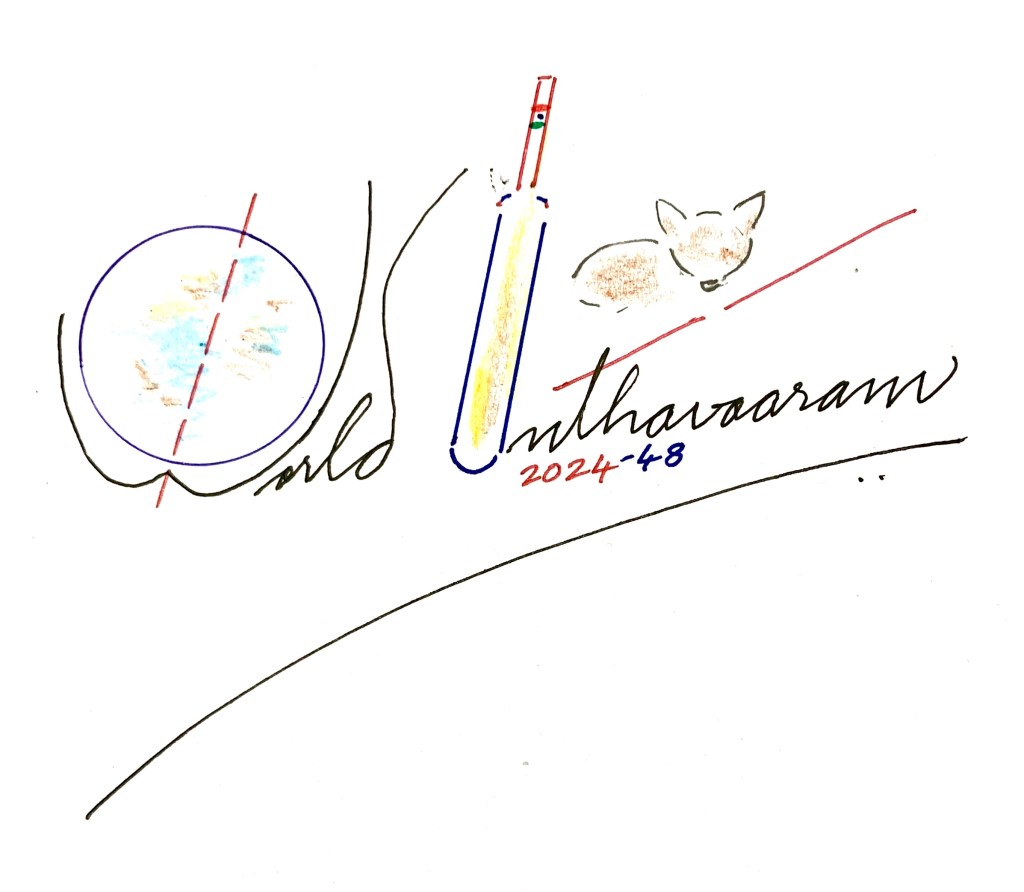
About: the world this week, 24 November to 30 November 2024: a belligerent Russia; Israel-Hezbollah ceasefire; rowdy Bangladesh; Australia under-16; India State Elections; Earth’s tilt; small in Argentina; and India’s cricket, down under.
Everywhere
Russia Ups The Ante
The Russia-Ukraine war moves on fiercely, with the threat of escalation and spill-over in the region a dangerous possibility.
Last week, Russia demonstrated its Oreshnik (hazel tree) hypersonic weapon system-without a warhead-to checkmate NATO and the United States, and also issue a warning to the West. It is a devastating, unstoppable surgical strike weapon that basically drops metal lightning out of the sky like Thor’s Hammer or the comets of God. The Oreshnik missile is capable of reaching speeds up to Mach 10 and currently lacks any known countermeasure in missile defense systems.
This week, Russia escalated the conflict in Ukraine with more lethal weaponry and deploying troops from Yemen to bolster its front-lines.
Russian President Vladimir Putin ‘opened a door’ to end the conflict, praising US President-elect Donald Trump as ‘intelligent and experienced’ and capable of finding solutions. Trump had pledged, during his campaign, to end the war in Ukraine ‘within 24 hours’. Of course, without saying how!
It’s absolutely clear that this war cannot end in a victory by either side. Talks and negotiations are the only means of stopping the madness-before it engulfs the world.
Israel and Hezbollah Ceasefire
A ceasefire between Israel and Hezbollah-operating out of Lebanon-took effect this Wednesday after both sides accepted an agreement brokered by the United States and France. Israel’s security cabinet approved the deal in a 10-1 vote.
The deal stipulates a 60-day halt in hostilities, and hopefully lays the foundation for lasting truce in the region. It requires Israeli ground troops to withdraw from south Lebanon, and, on its turn Hezbollah would end its armed presence along the border south of the Litani River and retreat 40 kilometers away from the Lebanon-Israel border. The vacated spaces will be filled by Lebanon’s Army, which will be deployed in the region-originally a Hezbollah stronghold-within 60 days.
The agreement will maintain Israel’s freedom of operation to act in defence to remove threats posed by Hezbollah and enable displaced Israeli residents to return safely to their homes in northern Israel. On its part, Lebanon would implement a more rigorous supervision of Hezbollah’s movements in the border areas and south of the Litani River to prevent Hezbollah militants from regrouping. Will the ceasefire hold?
Israel’s PM Benjamin Netanyahu said he was ready to implement the ceasefire and would respond forcefully to any violation by Hezbollah. And added that the ceasefire would allow Israel to focus on the threat from Iran, replenish depleted arms supplies and give the army a rest; and to isolate Hamas, and focus more on war in Gaza and release of the hostages.
Netanyahu said, “We have successfully killed approximately 20,000 Hamas terrorists in Gaza since the war began”.
On the other side, it’s estimated that Israel lost 806 IDF soldiers in the process.
Rowdy Bangladesh
The boil in Bangladesh ever since the widespread political violence, which led to the ouster of former Prime Minister Sheikh Hasina, continues. And tensions over minority rights and deadly violence against Hindus in particular, bludgeons the headlines. The new military-backed interim government led by Nobel Prize Winner Mohammed Yunus has faced criticism for failing to curb a spike in violence against minorities. In recent months, Hindu businesses, homes, and temples have been vandalised, with the unrest worsening every day.
Hindus comprise about 8% of Bangladesh’s 170 million people.
This week, Chinmoy Krishna Das Brahmachari, a Hindu priest, an ISKCON monk, and a religious minority leader in Bangladesh, was arrested in Dhaka when he staged a peaceful protest against attacks on Hindus by radical Muslim outfits.
The arrest follows protests led by Hindus in the city of Rangpur, about 300 km north of the capital Dhaka, demanding stronger legal protections and a ministry dedicated to minority affairs.
Chinmoy Brahmachari was detained at Dhaka airport and his arrest comes after a sedition case was filed against him earlier this month – said to be for his outspoken stance against violence targeting Hindus. Earlier this month, sedition charges were filed against 19 people who participated in a minority rights rally in Chittagong.
Later in the week, the Government prosecutor argued that the ISKCON – International Society for Krishna Consciousness – is a ‘religious fundamentalist organisation’ and should be banned. That’s a horrible thing to say given the global nature of ISKCON and its humanitarian services in Bangladesh itself – during the recent floods – and the world over. Bangladesh’s High Court rightfully refused to go into the ban and volleyed the case back to the Government.
Australia’s New Under-16 Law
This week, Australia’s Parliament after an intense, emotive debate, approved and brought into law a Social Media Ban for children under the age of 16 years. This is now one of the World’s strictest laws of the kind.
The Law forces Tech Giants such as Instagram, Facebook, TikTok, Snapchat, and X to stop minors from logging in to their platforms, or face fines up to USD 32 million. Gaming and messaging platforms are exempt, as are sites that can be accessed without an account, say YouTube. A trial of enforcement methods will start in January 2025, with the ban kicking-in within a year.
‘We are making sure that Mums and Dads can have that different conversation today and in future days’, said Prime Minister Anthony Albanese.
India’s State Elections
It’s awfully stale and tiring, these elections in India: some people, somewhere are forever voting and the political class is dashing all over the country to make speeches and attend rallies. And makes one wonder whether all this voting works and the people get what they vote for. Or, is democracy only about elections and voting? The Air Quality Index in the New Delhi, for example, flirts above the danger mark ever so often while political parties sound the election bugle-adding noise to the already heavily polluted air-and blame each other.
Late last week, the results of Elections in the State of Maharashtra, which holds Mumbai the commercial capital of India, were declared. And it was a thumping landslide for the ruling The Bharatiya Janata Party (BJP)-led Mahayuti alliance, which secured an overwhelming mandate. The BJP won 132 out for the 149 seats it contested – an impressive strike rate of 89% – and partners, the Shiv Sena won 57 and the Nationalist Congress Party, 41.
The Opposition MVA (Maha Vikas Aghadi) Alliance bit the dust, getting a paltry 49 seats. India’s Grand Old Party, the Congress, part of the MVA, won just 16 and was decimated. The House has a total of 288 seats and the majority mark is 145.
This is a shocking turnaround for the Devendra Fadnavis led BJP in the State after an underwhelming performance in the Lok Sabha polls earlier this year. Maharashtra becomes the 6th state in India where the BJP has won back-to-back three elections. Others being Gujarat, Madhya Pradesh, Chhattisgarh, Goa, and Haryana.
However, in the State of Jharkand the BJP was pushed to second place with 21 seats and the local Jharkhand Mukti Morcha (JMM) winning 34 seats, and along with its Alliance partner, the Congress’ 16 seats (another 16 for the Congress!) will form a coalition Government. It was a mighty comeback for the JMM after its leader Hemant Soren was arrested and jailed by the Enforcement Directorate in January in a land scam case, which caused his resignation as Chief Minister. However, he obtained bail from the Jharkhand High Court and returned as Chief Minister to lead the INDI Alliance to victory. 2024 has become Soren’s comeback year.
The Jharkhand Assembly has a total of 81 seats with 41 being the majority mark.
The JMM in particular stressed on adivasi asmita (tribal pride) and showcased its Mukhyamantri Maiya Samman Yojana Scheme, which provides Rs 1,000 per month to eligible women. The turnout of women-4% higher this time-seems to have put the JMM over the top. Credit must also go to Kalpana Soren, who entered politics after her husband was sent to prison. Though the BJP derisively dubbed the power couple ‘Bunty aur Babli’ ahead of the polls, she is credited with revitalising the party and keeping the cadres ‘warmed-up’, in Soren’s absence.
In the bye-elections of various States, it was a wonderful comeback victory for the BJP in Uttar Pradesh State winning 7 out 9 seats in the Assembly. This, after a surprise loss in the Lok Sabha Elections, which was responsible for the BJP falling short of a majority on its own at the Centre.
The Earth’s Tilt
When an object the size of Mars, named Theia is thought to have crashed into the newly formed planet Earth around 4.5 billion years ago, it knocked our planet over and left it (dazed and) tilted at an angle. Ever since this impact, Earth has been orbiting the Sun at a slant. This slant is the axial tilt, also called obliquity and is measured as 23.4 Degrees.
Since Earth orbits the Sun at an angle, solar energy reaching different parts of Earth is not constant, but varies during the course of the year. This is the reason we have different seasons, and why they are opposite in the Northern and Southern Hemispheres.
Now Scientists have found that the Earth has tilted 80.01 centimetres (31.5 inches) over the last two decades. But the tilt had nothing to do with weird space phenomena, mysterious asteroids, the sun’s gravity, or solar flares, and everything to do with how people are pumping groundwater and shipping it across the planet, a study found. The findings of a study from June 2023 are making headlines over a year after it was published. The planet continuing to tilt is because humans are pumping and moving an obscene amount of groundwater across the planet and redistributing it, according to the study’s press release. This pumping contributed to about 6 centimetres rise in global sea levels. The water was pumped for drinking, agriculture, and industrial use. That makes sense, doesn’t it? Everything you do on the Planet counts, mind it!
While the current shift in Earth’s tilt is not ‘great enough’ to affect weather patterns or seasons immediately, researchers caution that continued groundwater depletion could have long-term climatic impacts.
Oh Deer!
Argentina is celebrating in a small way, of things small.
A rare Pudu fawn was born in a Biopark in Argentina earlier this month, giving scientists and conservationists a unique chance to study and collect data on the tiny deer. We are learning about this after almost a month – giving time for the tiny fawn to get on its feet.
Weighing just 1.21 kilograms the delicate, fragile, and white-spotted male pudu fawn was named Lenga after a tree species endemic to the Andean Patagonian forest of Chile and Argentina.
Pudus are one of the smallest deer species in the world, growing up to 50 centimetres tall and reaching a weight of about 12 kg. They are enigmatic, elusive, hard to see, and flee in zig-zags when chased by predators. The tiny deer face threats from wild dogs and species introduced into southern Argentina and Chile. There are only about 10,000 Pudus living in the world and are classified as near-threatened by the International Union for Conservation of Nature (IUCN).
Lenga is spending his days exploring the park with his mother Chalten and father Nicolino. He will be breast-fed for the first two months until he can handle a herbivorous diet. After that, Lenga will lose his white spots and grow the mottled colour that helps Pudus camouflage themselves in their environment from both daytime and nighttime predators. After about one year, hopefully, Lenga will develop antlers that typically- for Pudus- reach up to 10 cm.
Oh India!
India’s cricket team is touring Australia from November 2024 to January 2025. The plan is to play five Test matches and three first-class warm-up matches against the Australia’s cricket team. The Test matches form part of the 2023–2025 ICC World Test Championship.
The 1st Test was played at Perth between 22nd November and 26th November and India hammered Australia, down under, in a historic test win. This was Australia’s first loss in a Test match at the Perth Stadium, with India became the first visiting team to win a Test match at the ground. This was also India’s biggest victory in terms of runs in Australia. Records are made every day in cricket!
With the absence of skipper Rohit Sharma and star batsman Shubman Gill, the popular belief was that Team India would face a torrid time in the first test. However, star pacer Jasprit Bumrah stepped in as Captain and did a swashbuckling job.
India won the toss and elected to bat, scoring 150 runs in the first innings and blowing out Australia for 104 runs. With a 46 run lead, India went into the 2nd innings to score 487 runs, declaring with 6 wickets down. And giving the Aussies a run-chase of 533 to win.
In the chase, Australia kept losing wickets at regular intervals as India bundled them out for 238. For India, Mohammed Siraj and Jasprit Bumrah scalped three wickets each, while Washington Sundar took two wickets. Centuries by Yashasvi Jaiswal and Virat Kohli, followed by Jasprit Bumrah’s magnificent bowling helped India thrash Australia by 295 runs.
India’s Jaiswal scored 161 while Kohli brought up his memorable 30th Test ton breaking Sachin Tendulkar’s record of most test centuries (7) for India in Australia. India’s KL Rahul scored his 3,000th run in Tests.
With this win, India takes an early 1-0 lead in the five-match series.
More hitting stories – small and big – coming-up in the weeks ahead. Watch and grow with World Inthavaaram.




 Kumar Govindan's Words